YOUR NEXT DISCOVERY/ArtifactsFollow your curiosity
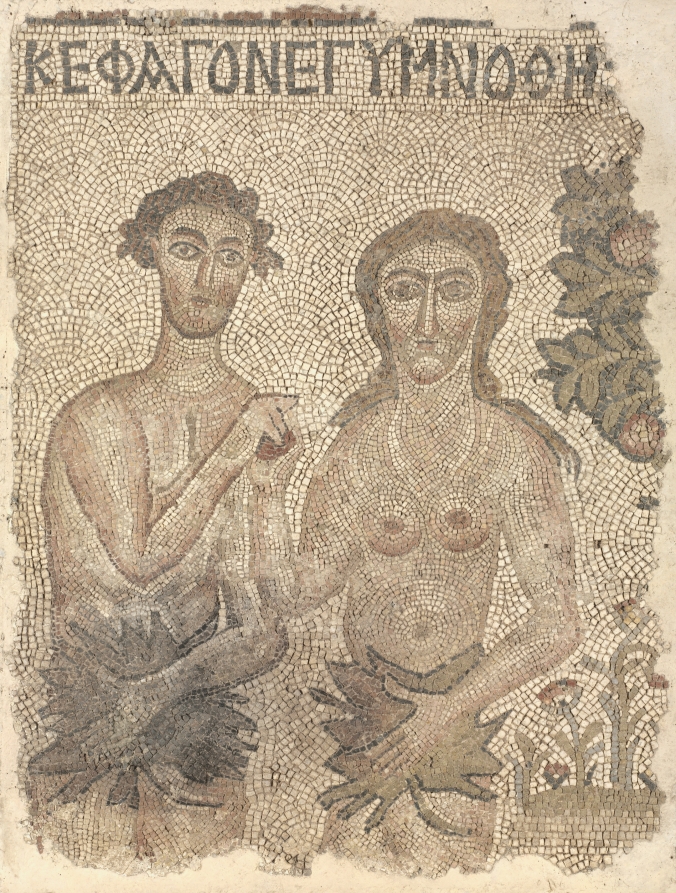
Fragment of a Floor Mosaic: Adam and Eve, from The Cleveland Museum of Art
The Cleveland Museum of Art · Open Access · Reuse terms

early Byzantium, Northern Syria, Byzantine period, late 5th-early 6th century / late 400s–early 500s CE

Fragment of a Floor Mosaic: Adam and Eve

Fragment of a Floor Mosaic: Adam and Eve

The Cleveland Museum of Art catalogs Fragment of a Floor Mosaic: Adam and Eve as mosaic (early Byzantium, Northern Syria, Byzantine period, late 5th-early 6th century · late 400s–early 500s CE).

In the Syrian village where this mosaic was created, few people could read and even fewer had access to books. The images within the church educated the community, leading 5th-century Pope Gregory the Great to describe religious images as "books for the illiterate."

SERENDIPITYA little unexpected
FamiliarWeird

The museum identifies this mosaic as marble and stone tesserae.

The museum's collection notes: This mosaic panel representing the Fall of Adam and Eve once formed part of a much larger mosaic decorating the floor of an early Byzantine church in northern Syria. Here, Adam and Eve are portrayed sharing the forbidden fruit while covering themselves with large leaves. At the top of the panel, a Greek inscription reads, "And they ate and they were made naked," recalling the biblical text (Gen. 3:7) and highlighting the two moments in the biblical narrative of the Fall that are depicted here.

The Cleveland Museum of ArtFragment of a Floor Mosaic: Adam and Eve

Original explanation based on the sources above. Images carry their own reuse terms.