YOUR NEXT DISCOVERY/ArtifactsFollow your curiosity
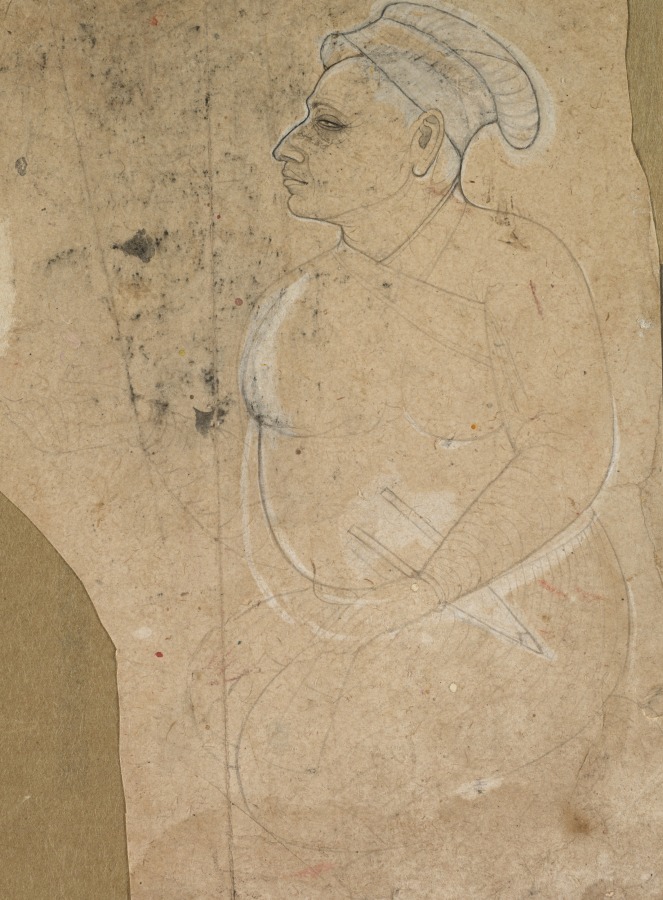
Portrait of a blind man, from The Cleveland Museum of Art
The Cleveland Museum of Art · Open Access · Reuse terms

Northern India, Pahari kingdoms / c. 1750

Portrait of a blind man

Portrait of a blind man

The Cleveland Museum of Art catalogs Portrait of a blind man as drawing (Northern India, Pahari kingdoms · c. 1750).

The subject of this drawing might be a posthumous portrait of the blind king Sital Dev of Mankot (reigned 1630–1660), who died several decades before this drawing was made.

SERENDIPITYA little unexpected
FamiliarWeird

The museum identifies this drawing as Gum tempera on paper.

The museum's collection notes: This sensitive portrait survives as a fragment, part of a study for a larger painting. White paint indicates areas the artist reworked. This man’s Mughal tunic, with a katar dagger tucked into the sash, indicates that he is a noble, probably Hindu, because the tunic is tied under the left arm. The gesture of his right hand—just a ghost of an indication—and slightly parted lips suggest that he is making a request.

The Cleveland Museum of ArtPortrait of a blind man

Original explanation based on the sources above. Images carry their own reuse terms.