YOUR NEXT DISCOVERY/ArtifactsFollow your curiosity
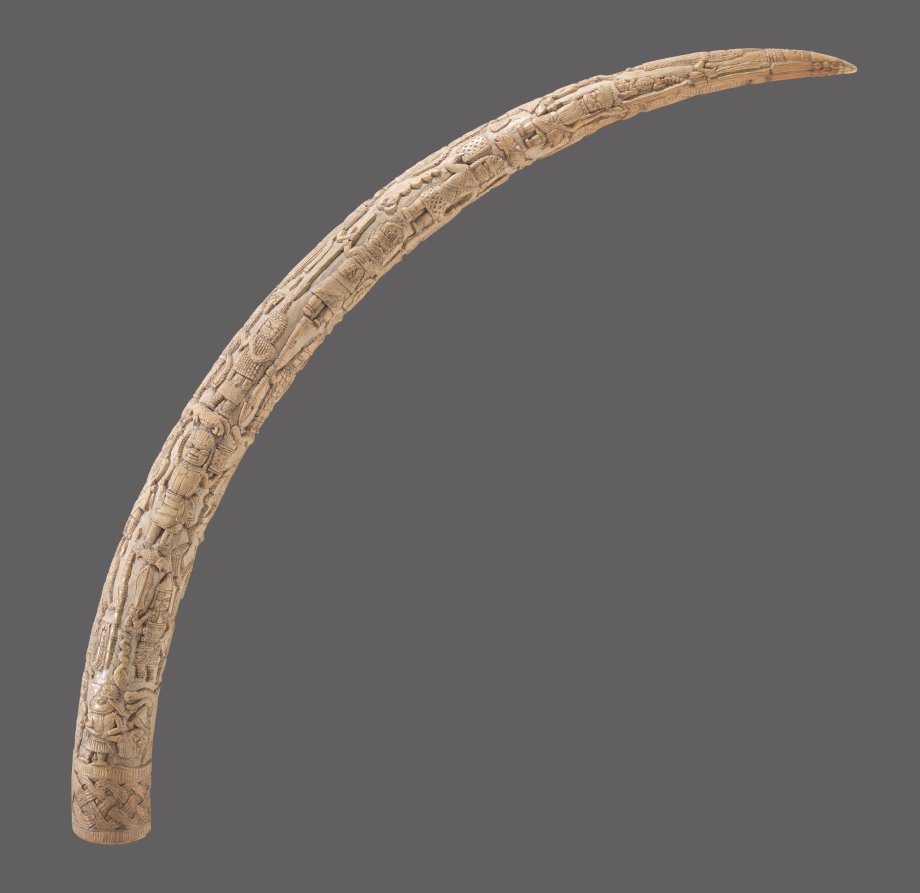
Ancestral Altar Tusk, from The Cleveland Museum of Art
The Cleveland Museum of Art · Open Access · Reuse terms

Nigeria, Benin Kingdom, Ẹdo peoples, members of the Igbesanmwan (wood and ivory carvers) guild / c. 1820

Ancestral Altar Tusk

Ancestral Altar Tusk

The Cleveland Museum of Art catalogs Ancestral Altar Tusk as sculpture (Nigeria, Benin Kingdom, Ẹdo peoples, members of the Igbesanmwan (wood and ivory carvers) guild · c. 1820).

Originally, this carved tusk was placed on an ancestral altar as part of an ensemble of objects made to memorialize a deceased Ọba (ruler).

SERENDIPITYA little unexpected
FamiliarWeird

The museum identifies this sculpture as Elephant ivory.

The museum's collection notes: Ọba Ọsẹmwẹdẹ commissioned the carving of this tusk to connect with his ancestors and symbolize his strength. It is covered with royal figures wearing elaborate regalia and scenes of power, ritual, and violence. While Benin royal symbols may look similar across centuries, their meanings can shift. Ọsẹmwẹdẹ’s reign was prosperous due to trade with the Dutch; however, 16th-century Portuguese men are carved on the lower tusk. By the 1800s they represented any European traders. This tusk’s surface likely became worn and cracked from frequent washing, bleaching, and the applying of a white clay ( orhue ) linked to peace, purity, and prosperity.

The Cleveland Museum of ArtAncestral Altar Tusk

Original explanation based on the sources above. Images carry their own reuse terms.