YOUR NEXT DISCOVERY/ArtifactsFollow your curiosity
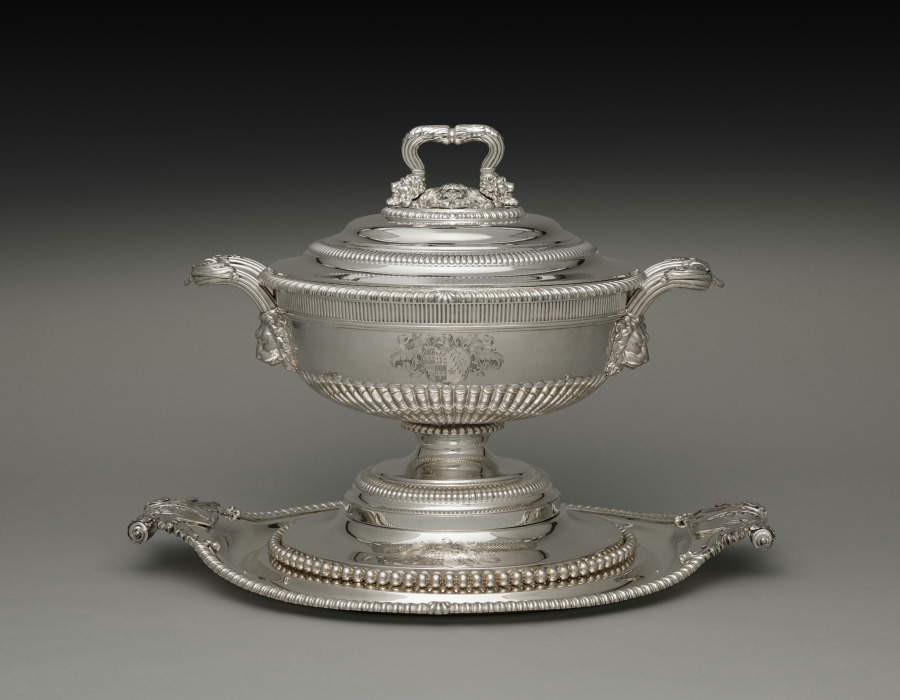
Covered Tureen on Stand, from The Cleveland Museum of Art
The Cleveland Museum of Art · Open Access · Reuse terms

England, London / 1812

Covered Tureen on Stand

Covered Tureen on Stand

The Cleveland Museum of Art catalogs Covered Tureen on Stand as silver (England, London · 1812).

While the word “tureen” was derived from the Latin word terrine , the name has also long been associated with the Marshal of France, Vicomte de Turenne (1611–1675), who according to legend once drank soup from his helmet.

SERENDIPITYA little unexpected
FamiliarWeird

The museum identifies this silver as silver and credits Paul Storr (British, 1771–1844).

The museum's collection notes: Silver fulfilled a prominent role in projecting wealth, status, power, and ritual in British life during the 1600s and 1700s. Elaborate forms such as this tureen, with its lionhead finials, acanthus leaves, and fluted detailing, not only represented wealth in its sheer silver weight but also provided royal and aristocratic owners a surface for displaying engraved coats of arms. The arms of the High Sheriff of Yorkshire, Timothy Hutton and his wife Elizabeth Chaytor of Spennithorne Hall in northern England are engraved on this tureen and stand by Paul Storr, one of the most prominent London silversmiths of the period.

The Cleveland Museum of ArtCovered Tureen on Stand

Original explanation based on the sources above. Images carry their own reuse terms.