A CLOSER LOOK
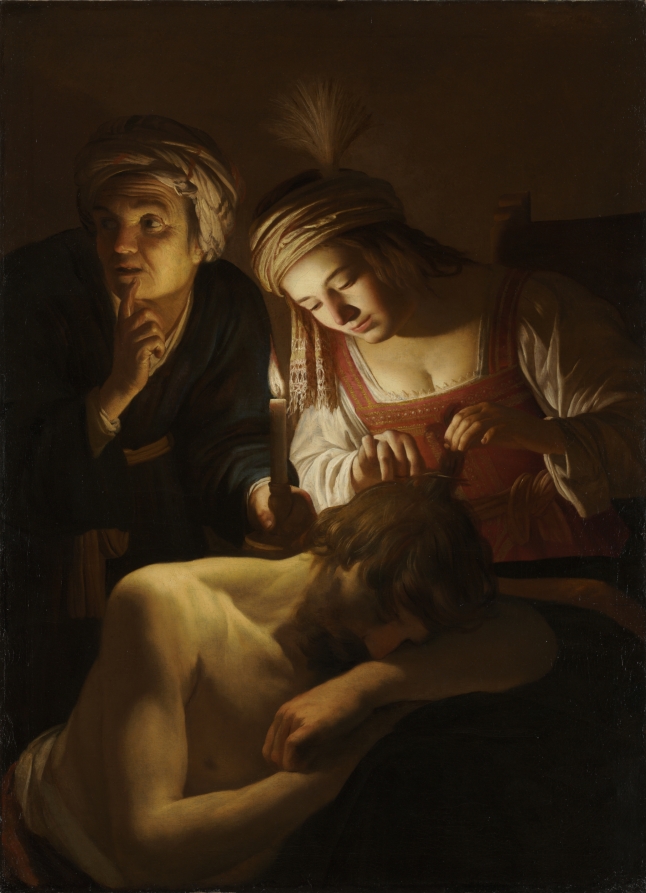
The museum identifies this painting as oil on canvas and credits Gerrit van Honthorst (Dutch, 1590–1656).
The museum's collection notes: In retaliation for Samson’s single-handed decimation of their army, the Philistines bribed his lover Delilah to discover the source of his strength: his hair, uncut since birth. Samson’s hair was shorn as he lay sleeping in Delilah’s lap, draining his strength and allowing the Philistines to capture him. Honthorst intensified the inherent drama of the scene by limiting his depiction to just three closely packed figures, starkly illuminated by a single candle. The old woman’s silencing gesture involves the viewer in the action, making us complicit in Delilah’s deceit.