YOUR NEXT DISCOVERY/ArtifactsFollow your curiosity
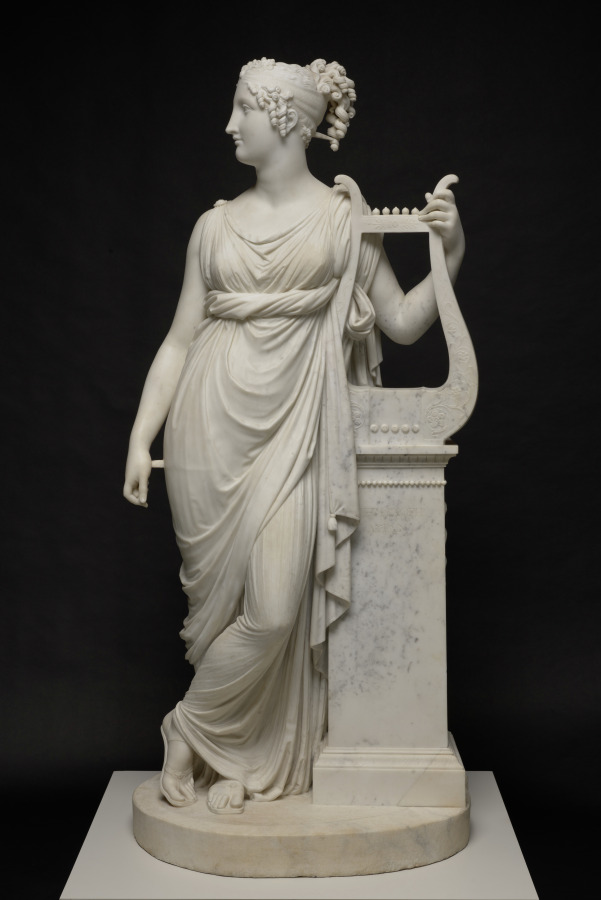
Terpsichore Lyran (Muse of Lyric Poetry), from The Cleveland Museum of Art
The Cleveland Museum of Art · Open Access · Reuse terms

Italy, 19th century / 1816

Terpsichore Lyran (Muse of Lyric Poetry)

Terpsichore Lyran (Muse of Lyric Poetry)

The Cleveland Museum of Art catalogs Terpsichore Lyran (Muse of Lyric Poetry) as sculpture (Italy, 19th century · 1816).

Trained by his grandfather, an Italian stonemason, Canova began modeling clay and carving marble sculptures before age ten.

SERENDIPITYA little unexpected
FamiliarWeird

The museum identifies this sculpture as marble and credits Antonio Canova (Italian, 1757–1822).

The museum's collection notes: In Greek mythology, Terpsichore was one of the nine Muses, or goddesses of creative inspiration. The lyre, the Greek inscription on the short column, and the caduceus (entwined snakes) on the side identify the figure as Terpsichore Lyran, muse of lyric poetry. This sculpture began with a commission from Napoleon's brother, Lucien, for an idealized portrait of his wife, Alexandrine. Antonio Canova made this version for a British aristocrat and exhibited it in 1817 at the Royal Academy in London to great acclaim.

The Cleveland Museum of ArtTerpsichore Lyran (Muse of Lyric Poetry)

Original explanation based on the sources above. Images carry their own reuse terms.