A CLOSER LOOK
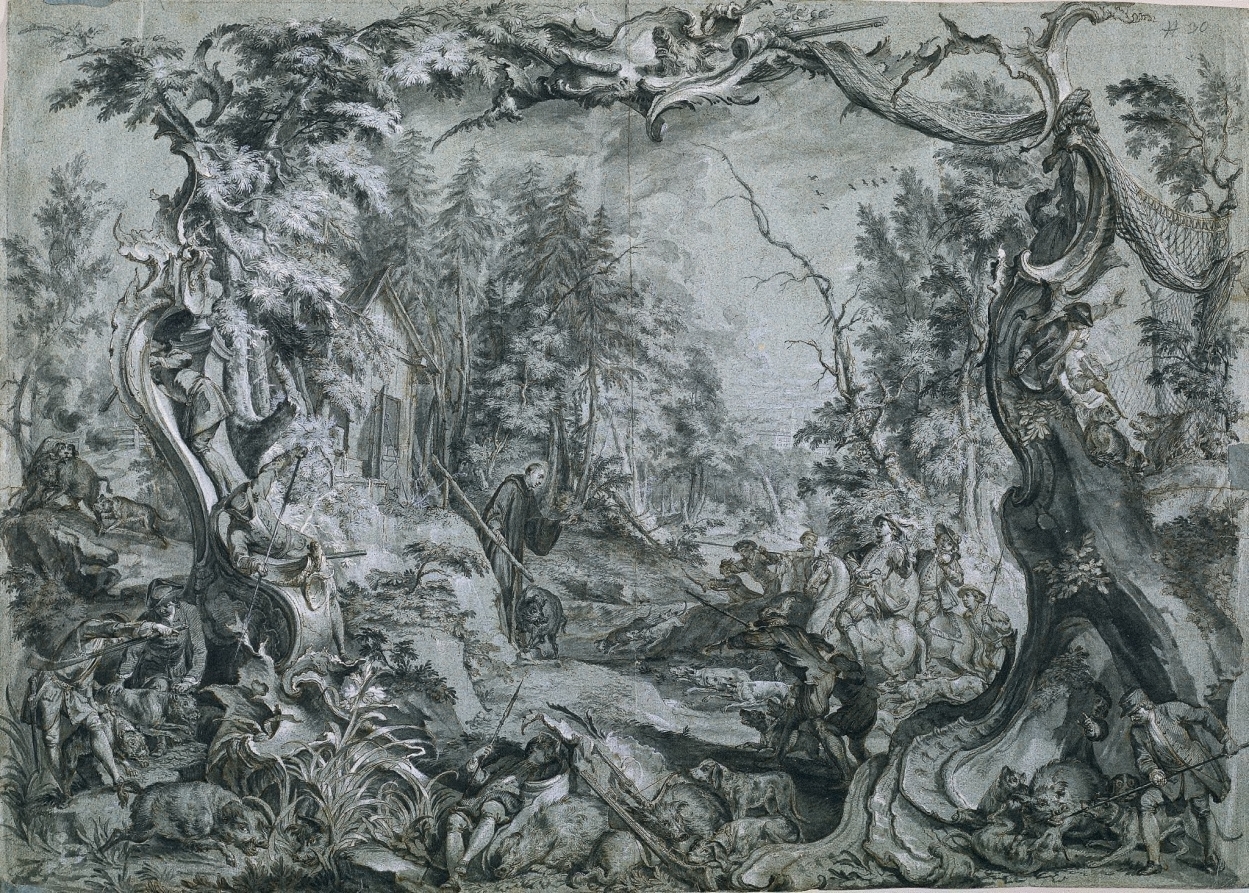
The museum identifies this drawing as pen and brown and gray inks and brush and gray wash heightened with white gouache; incised, verso coated with red chalk and credits Johann Wolfgang Baumgartner (German, 1712–1761).
The museum's collection notes: German artist Johann Wolfgang Baumgartner's innovations in rococo design are magnificently demonstrated in this sheet showing the story of Saint Deicolus and the Boar. The format of the work imitates that of a decorative cartouche, an ornamental framework surrounding an open field usually reserved for an inscription or emblem. Baumgartner ingeniously adapted the cartouche form for this scene: the framing elements seem to grow out of the landscape but are clearly artificial, and have the appearance of exuberant metalwork intertwined with vegetation and rocks. Deicolus was an Irish saint who founded an abbey in the Burgundy region of France. Ba