YOUR NEXT DISCOVERY/ArtifactsFollow your curiosity
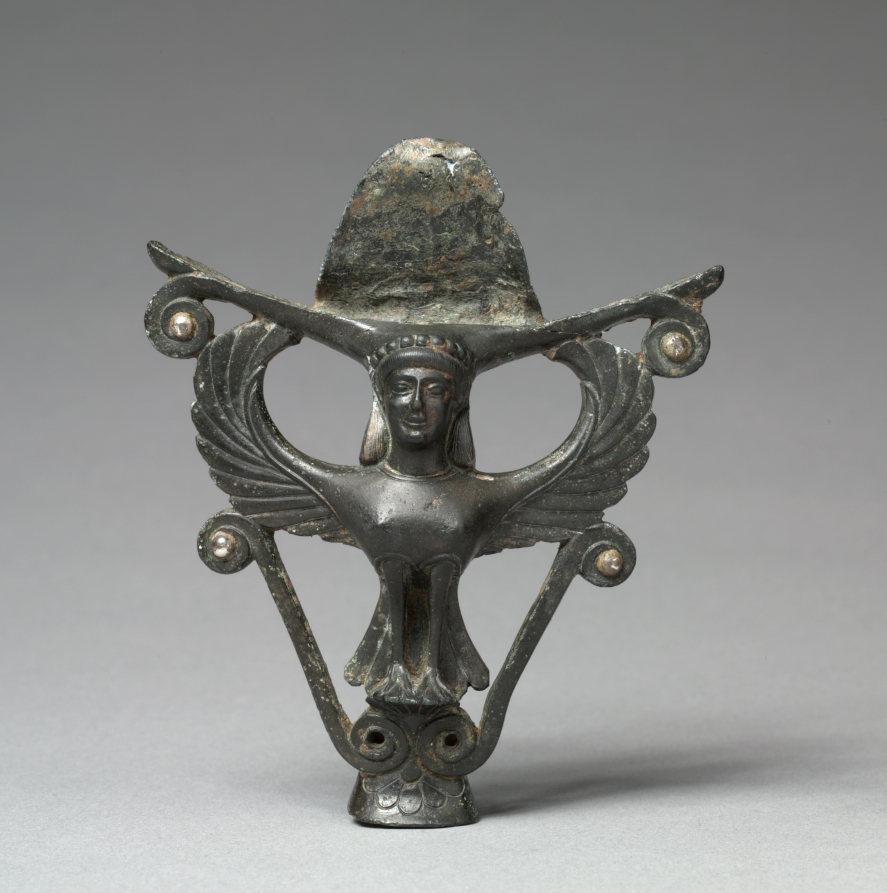
Mirror Support: Siren, from The Cleveland Museum of Art
The Cleveland Museum of Art · Open Access · Reuse terms

Greece, Corinth, presumably of Corinthian or Argive origin / c. 475 BCE

Mirror Support: Siren

Mirror Support: Siren

The Cleveland Museum of Art catalogs Mirror Support: Siren as sculpture (Greece, Corinth, presumably of Corinthian or Argive origin · c. 475 BCE).

This elaborate siren served a practical function, connecting a separately made handle and mirror, now lost.

SERENDIPITYA little unexpected
FamiliarWeird

The museum identifies this sculpture as bronze with silver inlays.

The museum's collection notes: This is a bronze of exceptional quality. When complete, it had a cylindrical handle, probably of painted ivory. The reflecting disk was probably of silver, as are the inlays. The intact mirror was obviously an object of great luxury. Sirens (part bird and part woman) were sea-songstresses whose captivating voices drew sailors off course to their deaths. Sirens also accompanied the dead on their voyage to the underworld. The idea was probably imported from Egypt where human-headed ba birds embodied a deceased person's spirit.

The Cleveland Museum of ArtMirror Support: Siren

Original explanation based on the sources above. Images carry their own reuse terms.