YOUR NEXT DISCOVERY/ArtifactsFollow your curiosity
Icon of the Virgin and Child, from The Cleveland Museum of Art
The Cleveland Museum of Art · Open Access · Reuse terms

Egypt, Byzantine period / 500s CE

Icon of the Virgin and Child

Icon of the Virgin and Child

The Cleveland Museum of Art catalogs Icon of the Virgin and Child as textile (Egypt, Byzantine period · 500s CE).

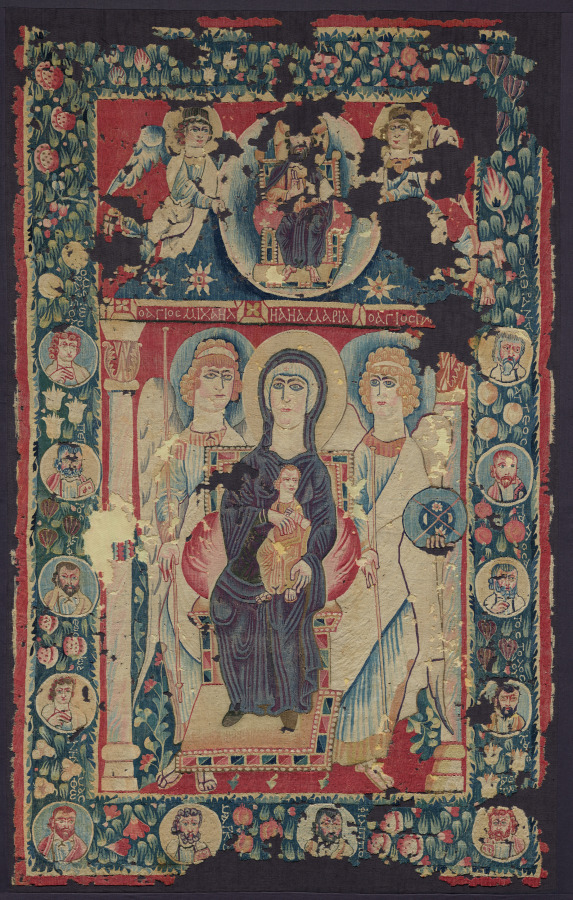
Created in Egypt's hot and dry desert climate, this tapestry features a border of lush greenery and fruits, while flowers peek out from around the throne of the Virgin. Imagine encountering this artistic oasis in a Coptic church during the dry heat of the day.

SERENDIPITYA little unexpected
FamiliarWeird

The museum identifies this textile as wool and dye.

The museum's collection notes: Woven from more than 20 colors of woolen thread, this rare tapestry was more expensive than a painting when it was made. The historical price reflected contemporary viewers’ appreciation for the skilled color blending by the weavers. Hung on a wall, this tapestry allowed viewers to venerate (honor) the Virgin Mary and the Christ Child in the Christian Orthodox church. Angels and apostles surround them, their names written in Greek. To be spiritually effective, an icon (devotional image) should follow its subject’s established visual tradition as closely as possible.

The Cleveland Museum of ArtIcon of the Virgin and Child

Original explanation based on the sources above. Images carry their own reuse terms.