YOUR NEXT DISCOVERY/ArtifactsFollow your curiosity
Clock, from The Cleveland Museum of Art
The Cleveland Museum of Art · Open Access · Reuse terms

Russia, St. Petersburg / 1908–17

Clock

Clock

The Cleveland Museum of Art catalogs Clock as timepiece (Russia, St. Petersburg · 1908–17).

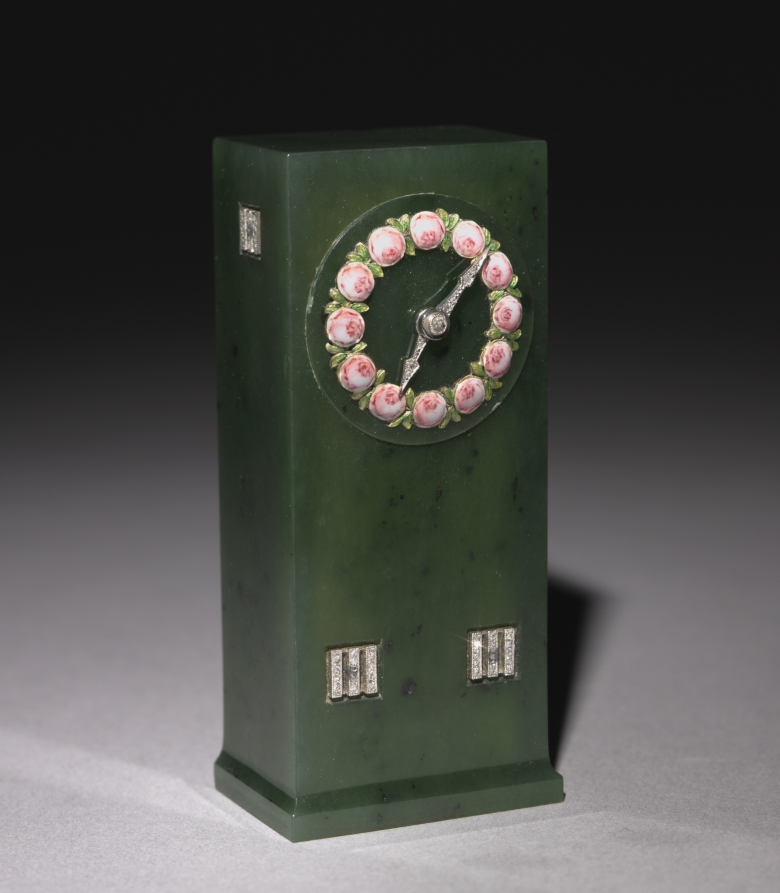
The face of this small luxurious desk clock features tiny pink enameled roses in place of the customary numbers along with hour and minute hands paved in diamonds.

SERENDIPITYA little unexpected
FamiliarWeird

The museum identifies this timepiece as nephrite, gold, enamel, diamonds and credits Henrik Wigström (Russian, 1862–1923).

The museum's collection notes: The use of Russian hardstones in creating precious objects became a hallmark of design from the House of Fabergé. Easily carved, these minerals were sourced largely from the western region surrounding the Ural Mountains. Fabergé's workmasters used colorful stones such as agate, lapis lazuli, rock crystal, rhodonite, and nephrite (jade), seen here in this small desk clock, to create and embellish flower studies, animal figures, and all manner of luxurious accessories.

The Cleveland Museum of ArtClock

Original explanation based on the sources above. Images carry their own reuse terms.