A CLOSER LOOK
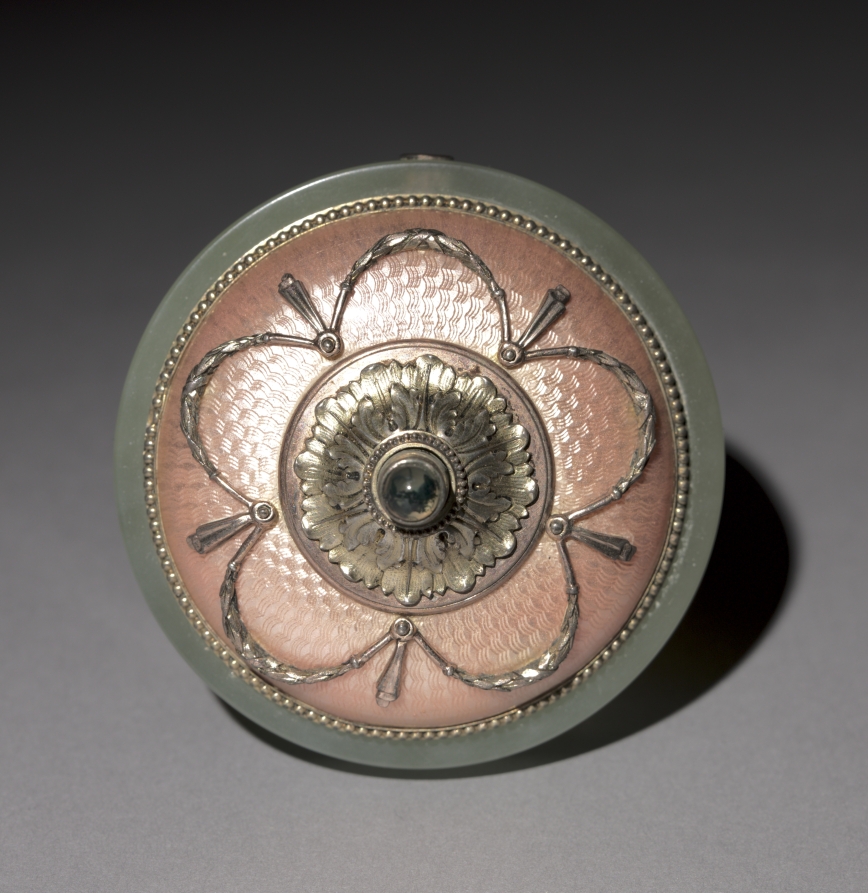
The museum identifies this miscellaneous as silver gilt, enamel, bowenite, cabochon sapphire and credits House of Fabergé (Russian, 1842–1918).
The museum's collection notes: This bell push sat on a dressing table in a wealthy household to summon a servant during the Gilded Age around 1900. Life "below stairs" wasn't as easy as movies and television have portrayed it. Servants could be summoned at all hours of the day and night, interrupting their work, and causing disruption at the whim of the wealthy owners or their guests. The House of Fabergé became the most celebrated Russian supplier of such luxury goods as servant bell pushes. As court jeweler to the Russian imperial family, the Fabergé firm created jewels and luxurious accessories both for the tsar and the Russian state as well as other European royalty an