YOUR NEXT DISCOVERY/ArtifactsFollow your curiosity
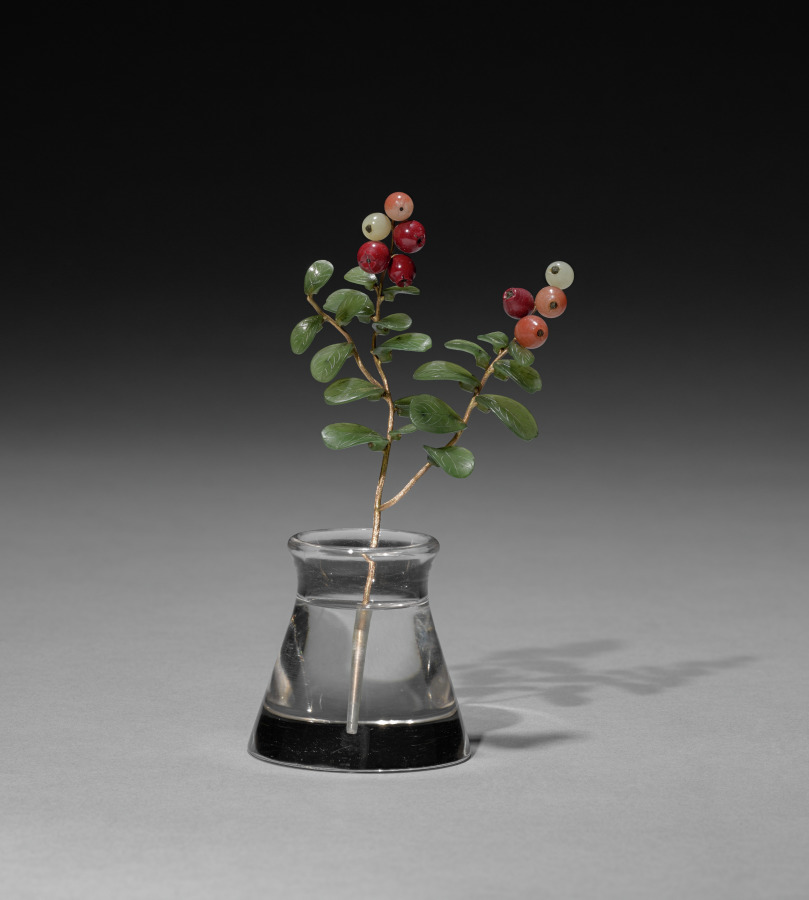
Flower Study of a Lowbush Cranberry or Lingonberry, from The Cleveland Museum of Art
The Cleveland Museum of Art · Open Access · Reuse terms

Russia, St. Petersburg / c. 1885–1915

Flower Study of a Lowbush Cranberry or Lingonberry

Flower Study of a Lowbush Cranberry or Lingonberry

The Cleveland Museum of Art catalogs Flower Study of a Lowbush Cranberry or Lingonberry as miscellaneous (Russia, St. Petersburg · c. 1885–1915).

The stems of Fabergé’s flower studies are set into little basins carved from rock crystal to resemble pots of water.

SERENDIPITYA little unexpected
FamiliarWeird

The museum identifies this miscellaneous as chalcedony, jade, rock crystal, gold and credits House of Fabergé (Russian, 1842–1918).

The museum's collection notes: This flower study depicts a lowbush cranberry or lingonberry. To achieve a naturalistic effect of ripening fruit, Fabergé varied the coloring of the berries. Some are made of chalcedony in hues of milky white to represent unripe berries, while others appear in deep reddish agate to represent ripe ones. Fabergé’s inspiration for his flower studies is said to have come from the floral brooches of precious stones that were made in the 1700s for Catherine the Great as well as from the Japanese art of flower arranging, known as ikebana. Fabergé’s flower studies were given as intimate gifts to friends by the tsarina and others in the court. She als

The Cleveland Museum of ArtFlower Study of a Lowbush Cranberry or Lingonberry

Original explanation based on the sources above. Images carry their own reuse terms.