A CLOSER LOOK
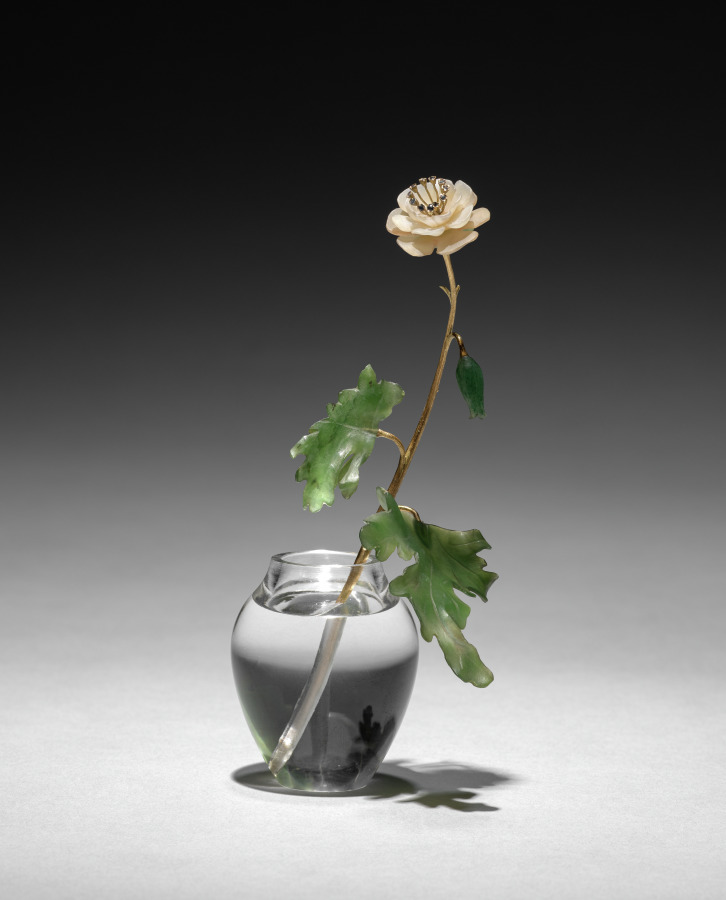
The museum identifies this miscellaneous as mat white stone, gold, sapphires, jade, rock crystal and credits Henrik Wigström (Russian, 1862–1923).
The museum's collection notes: This flower study depicts a wild anemone in bloom. Fabergé’s inspiration for his flower studies is said to have come from the floral brooches of precious stones that were made in the 1700s for Catherine the Great as well as from the Japanese art of flower arranging, known as ikebana. Small and delicate, Fabergé’s flower studies were given as intimate gifts to friends by the tsarina and others in the court. She also liked to take them around to wherever the imperial family was residing as a reminder of spring during the harsh Russian winters.