A CLOSER LOOK
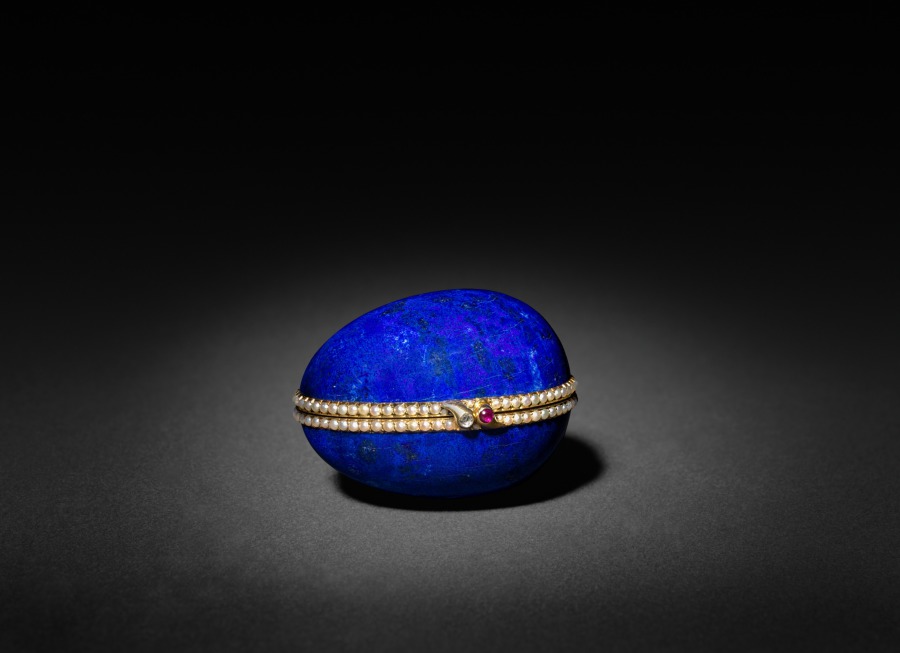
The museum identifies this miscellaneous as gold, enamel, lapis lazuli, pearls, diamonds, rubies and credits Peter Carl Fabergé (Russian, 1846–1920).
The museum's collection notes: Peter Carl Fabergé became the crown jeweler to the imperial court of Russia after he produced the very first Easter egg for Tsar Alexander III to give to his wife, Empress Marie Feodorovna. Fabergé created his celebrated Easter eggs, symbols of rebirth and renewal, as gifts for the Russian imperial family every year until he had to leave the country in 1919 after the Russian Revolution. Made of gold and lapis lazui from the Ural Mountains, this egg conceals a delightful surprise within of an imperial crown and a tiny ruby or pink sapphire on a chain.