YOUR NEXT DISCOVERY/ArtifactsFollow your curiosity
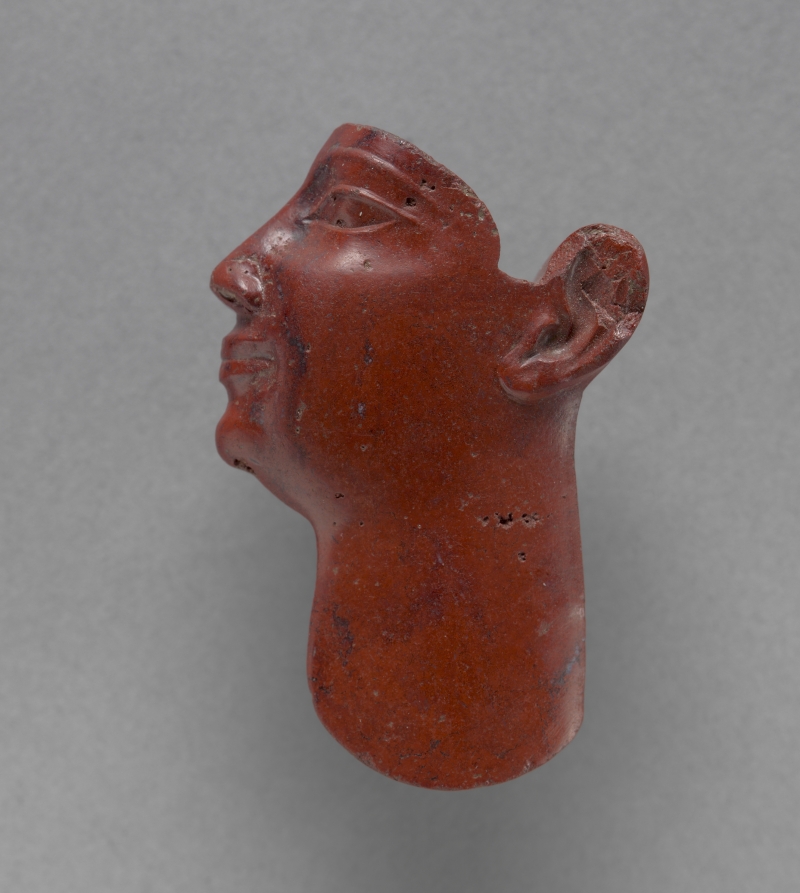
Inlay: Head of a King, from The Cleveland Museum of Art
The Cleveland Museum of Art · Open Access · Reuse terms

Egypt, Greco-Roman period (332 BCE–395 CE), Ptolemaic dynasty (305–30 BCE) / 380–246 BCE

Inlay: Head of a King

Inlay: Head of a King

The Cleveland Museum of Art catalogs Inlay: Head of a King as glyptic (Egypt, Greco-Roman period (332 BCE–395 CE), Ptolemaic dynasty (305–30 BCE) · 380–246 BCE).

Most Egyptian inlays are made of glass or faience, a type of ceramic, not precious or semiprecious stone like jasper.

SERENDIPITYA little unexpected
FamiliarWeird

The museum identifies this glyptic as red jasper.

The museum's collection notes: This miniature carved stone profile depicts a left-facing Egyptian king. The inlay was once part of a larger scene, with a cutaway on the king’s head clearly leaving room for an Egyptian crown and the neckline for a traditional broad collar. It is skillfully carved and made from red jasper, a semiprecious stone. The naturalistic handling of the cheeks and mouth date this inlay to the Ptolemaic period. An inlay such as this would have been set into a chest, throne, or even a royal coffin.

The Cleveland Museum of ArtInlay: Head of a King

Original explanation based on the sources above. Images carry their own reuse terms.