YOUR NEXT DISCOVERY/ArtifactsFollow your curiosity
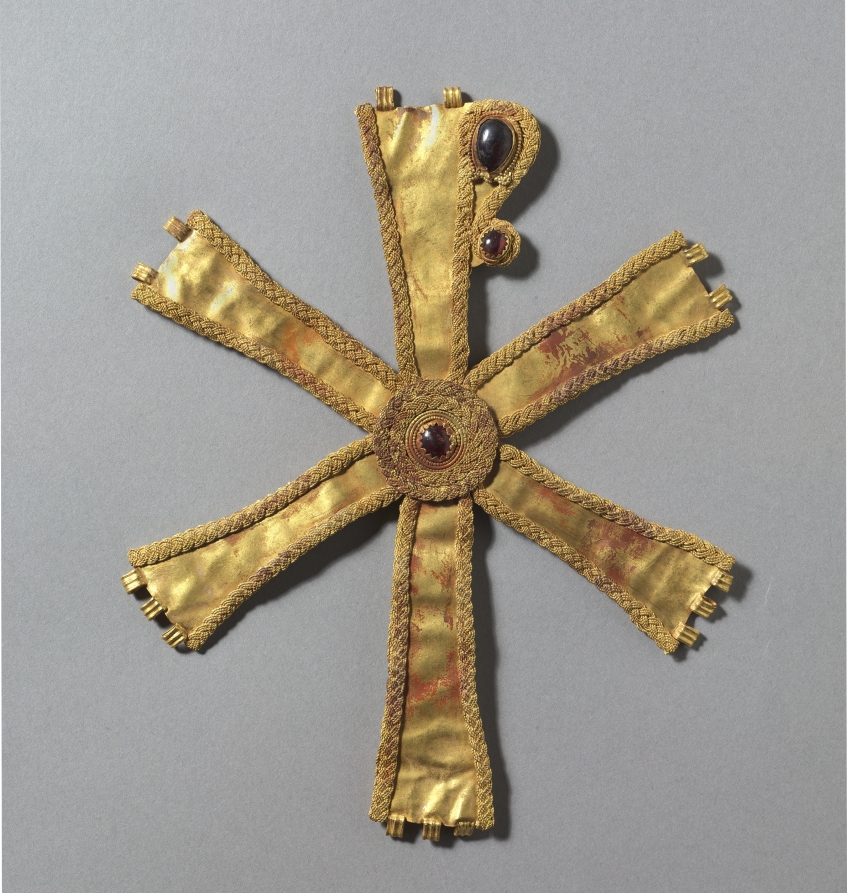
Monogram of Christ (Chrismon), from The Cleveland Museum of Art
The Cleveland Museum of Art · Open Access · Reuse terms

Byzantium, Syria, early Byzantine period, 6th century / 500s

Monogram of Christ (Chrismon)

Monogram of Christ (Chrismon)

The Cleveland Museum of Art catalogs Monogram of Christ (Chrismon) as metalwork (Byzantium, Syria, early Byzantine period, 6th century · 500s).

This image combines chi (X) and rho (P), the first two letters of Christ's name in Greek. The materials also had symbolic meaning, from the kingly gold to the deep, blood red of the garnets evoking his sacrifice.

SERENDIPITYA little unexpected
FamiliarWeird

The museum identifies this metalwork as gold sheet, gold wire, and garnets.

The museum's collection notes: The superimposed Greek letters chi and rho, the first two letters of Christ’s name, was a popular early Christian symbol. The monogram of Christ, or chrismon, is also a powerful symbol of imperial victory: it appeared to Emperor Constantine the Great before his battle against Maxentius in ad 312, promising victory in the name of Christ. Made of gold sheet and decorated with three garnets, it may have formed the center of a golden wreath, serving as a protective device and an emblem of Christian triumph.

The Cleveland Museum of ArtMonogram of Christ (Chrismon)

Original explanation based on the sources above. Images carry their own reuse terms.