YOUR NEXT DISCOVERY/ArtifactsFollow your curiosity
The Good Shepherd, from The Cleveland Museum of Art
The Cleveland Museum of Art · Open Access · Reuse terms

Anatolia, late Roman-early Christian / 280–90 CE

The Good Shepherd

The Good Shepherd

The Cleveland Museum of Art catalogs The Good Shepherd as sculpture (Anatolia, late Roman-early Christian · 280–90 CE).

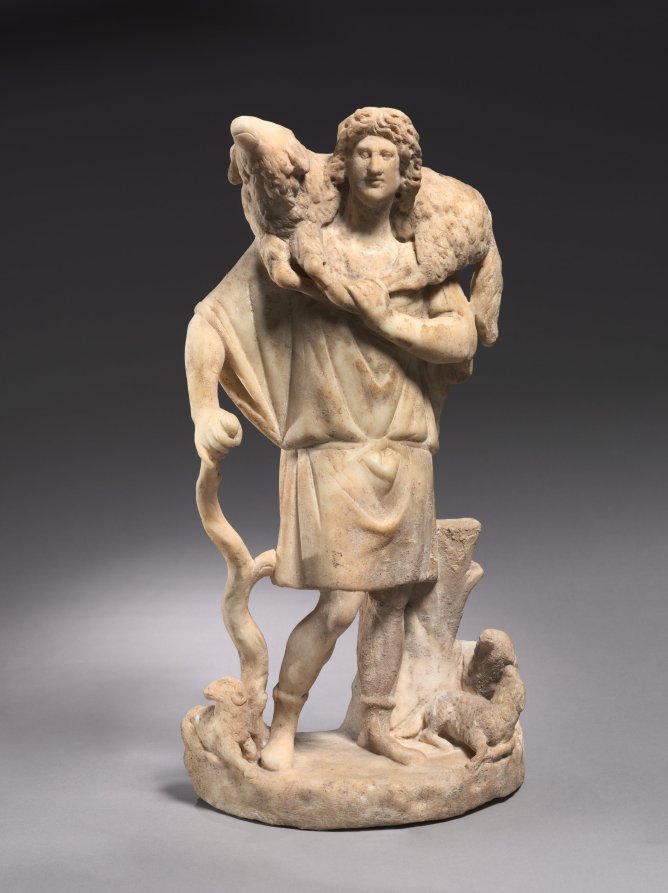
This youthful shepherd appears serene while bearing a large sheep on his broad shoulders. He looks untaxed by this effort and his calm presence seems to put the small sheep at ease, as they frolic at his feet. Since this sculpture was found together with the four Jonah statuettes, it is likely this figure depicts Christ as the Good Shepherd.

SERENDIPITYA little unexpected
FamiliarWeird

The museum identifies this sculpture as marble.

The museum's collection notes: Images of a youthful shepherd standing among his flock and carrying a sheep over his shoulders were popular with Romans of traditional faith as well as Christians living in the Late Roman Empire. Painted on the walls or the ceiling of a burial chamber or carved on a marble sarcophagus, this image might simply invoke the deceased’s hope for a peaceful afterlife spent in a pastoral setting. For Christians, this traditional Roman image took on a more specific meaning. It could be understood to refer to the passage in the Gospel according to John in which Christ said of himself: "I am the good shepherd. The good shepherd lays down his life for th

The Cleveland Museum of ArtThe Good Shepherd

Original explanation based on the sources above. Images carry their own reuse terms.