A CLOSER LOOK
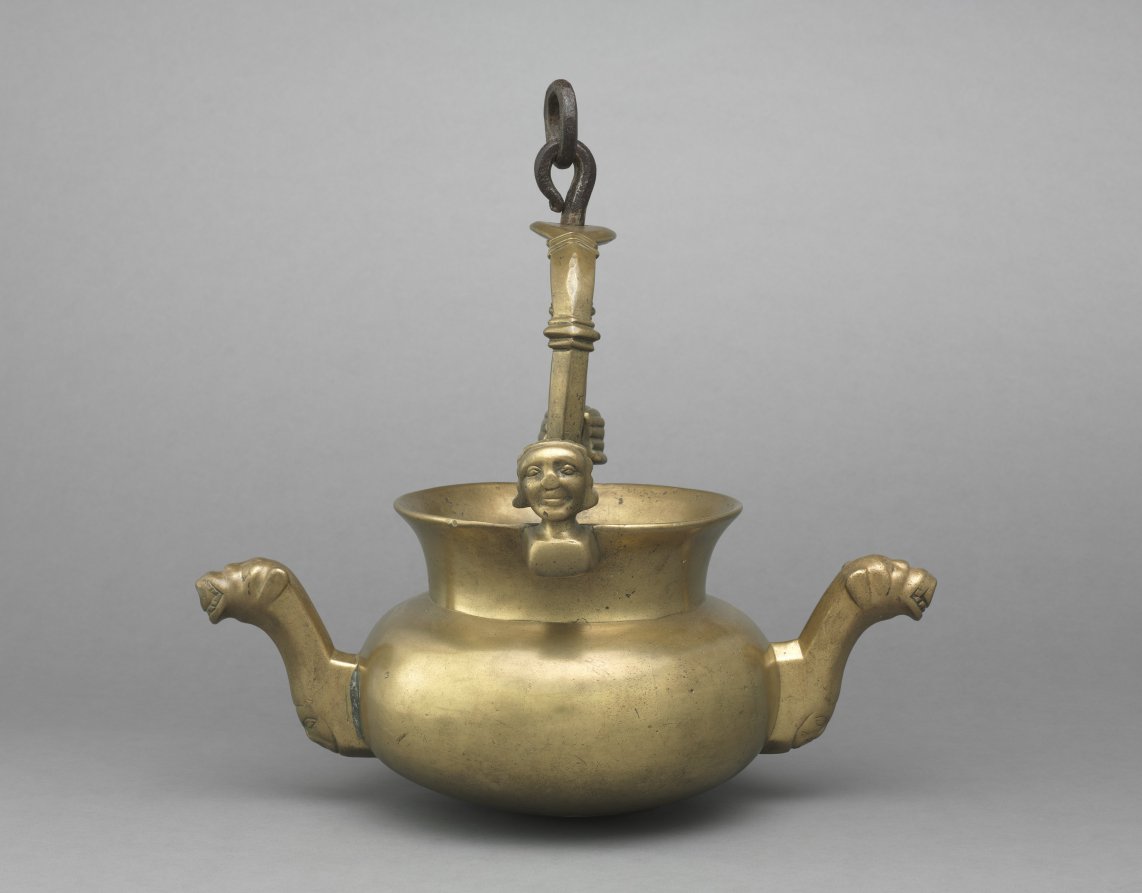
The museum identifies this metalwork as brass.
The museum's collection notes: In the Middle Ages a variety of vessels were used for hand washing. This brass container, called a lavabo, was designed to hold a large quantity of water and may have functioned in either a domestic or a liturgical setting. Its large capacity and relatively simple decoration suggests it served a communal function, either in a private home or perhaps in a monastery where it would have served as a hand-washing station near the refectory. In private homes, lavabos of similar design were usually hung from a chain or a trammel hook over or near the fire in the kitchen. The ring inserted at the top of the handle would have allowed for the rotation