A CLOSER LOOK
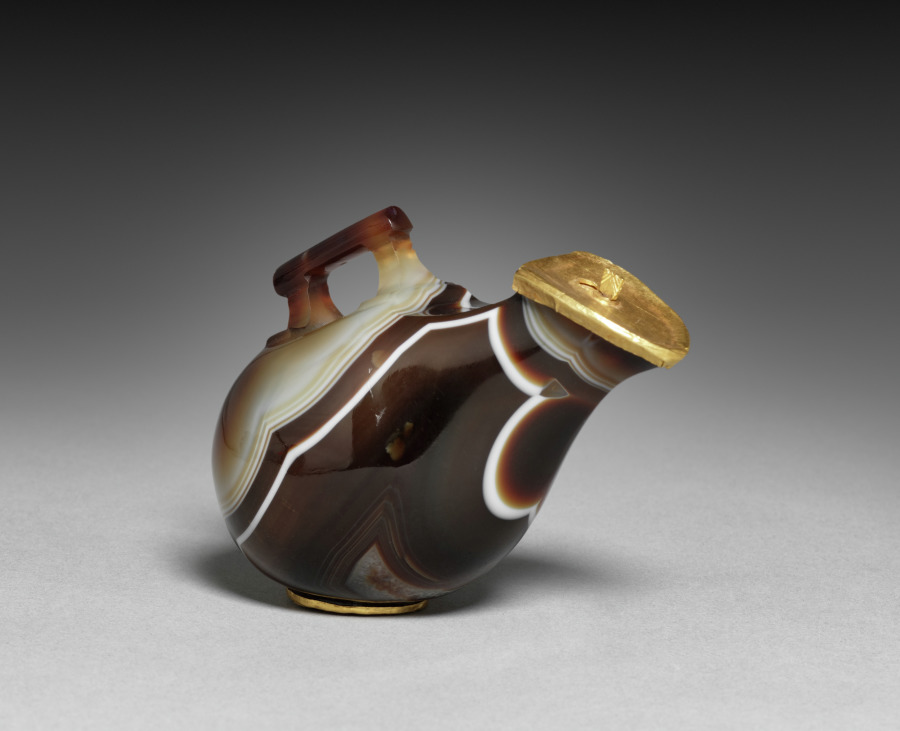
The museum identifies this cosmetic objects as agate and gold.
The museum's collection notes: This miniature vessel was carved from a single piece of banded agate, polished to a shine, and embellished with a gold lid and gold details on the base. Inside the ring of gold at the base is a trio of gold papyrus stalks, a likely reference to Egypt. In shape, it resembles an ancient wineskin, or askos , though its small size suggests use for luxury perfumes or oils. A tiny crab, likely once inlaid with a precious material, has been carved behind the handle.