A CLOSER LOOK
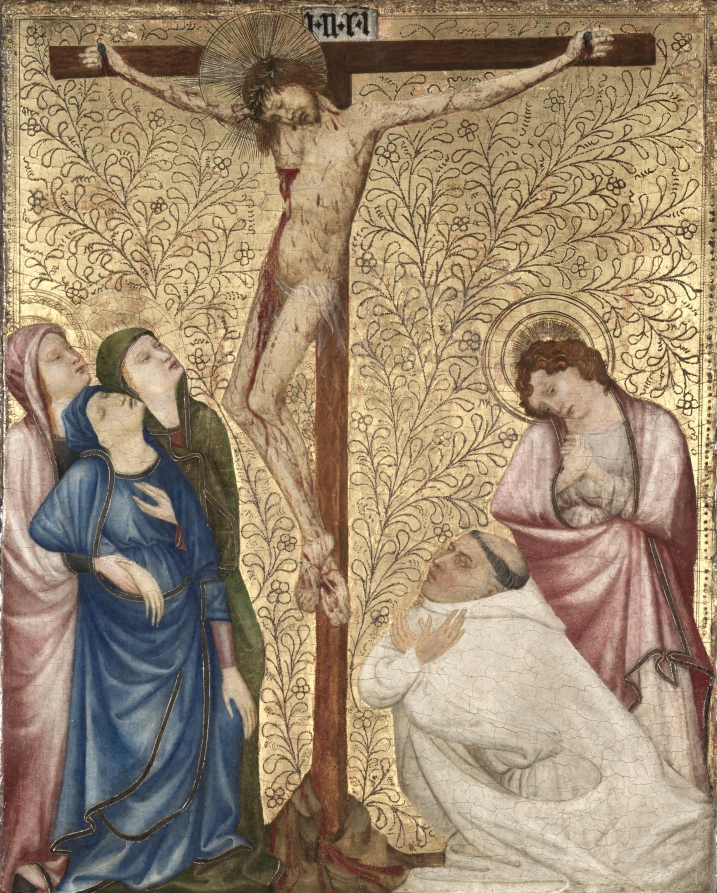
The museum identifies this painting as oil on oak panel and credits Jean de Beaumetz (French, c. 1335–1396).
The museum's collection notes: Jean de Beaumetz became the official court painter to the Burgundian duke, Philip the Bold, in 1376. Between 1389 and 1395 he created devotional paintings for the monks’ cells at the Chartreuse de Champmol, the monastery founded by Philip and his wife Margaret to house the ducal tombs. This panel, originally one of 26, is only one of two that have survived; the second is preserved in the Louvre in Paris. The Carthusians were intensely devoted to the Passion of Christ; particularly bloody images of the Crucifixion often decorated their cells. Isolated from one another, the monks contemplated the sacrifice of Christ (emphasized here by the pres