A CLOSER LOOK
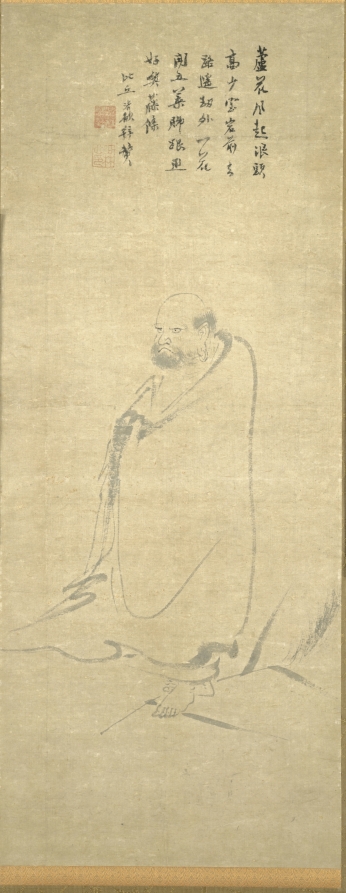
The museum identifies this painting as hanging scroll; ink on paper.
The museum's collection notes: Chan Buddhism was introduced to China in the early 500s by the Indian monk Bodhidharma, or Puti Damo (died before 534). Upon his arrival in China, Bodhidharma was allegedly granted an audience with the Liang dynasty emperor Wu (reigned 502–49). Realizing the emperor did not understand his mission, the monk left Nanjing, crossed the Yangzi on a reed, and settled north in Henan province’s Shaolin monastery. Here, Bodhidharma is sketched in few pale brushstrokes. The diluted and swift lines on an empty ground emphasize the Chan idea that all things are illusionary. The inscription reads: Wind rises from the reed flowers, the waves are high; It’s