A CLOSER LOOK
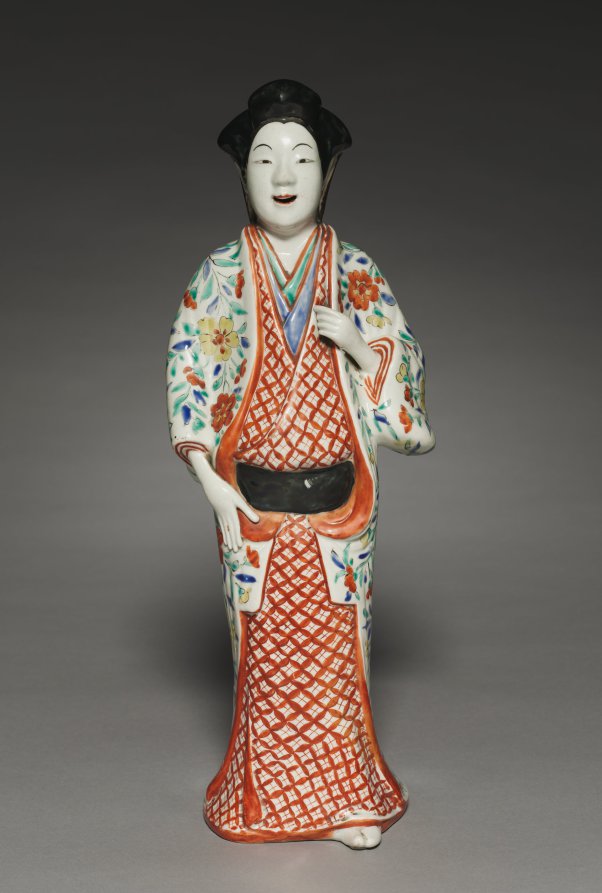
The museum identifies this ceramic as Porcelain with overglaze color enamels (Hizen ware, Kakiemon type).
The museum's collection notes: Dressed in layered robes and a jacketlike garment called an uchikake with a lively floral design, figures such as this one may have derived from dolls formed in the likeness of courtesans. It was produced in Hizen Province (in present-day Saga Prefecture on the island of Kyushu) by the Sakaida family of ceramists, the head of which has gone by the first name Kakiemon for many generations. As a result, the studio’s historical works are known as Kakiemon ware. The studio is distinguished for being among the earliest in Japan to use multicolor overglaze enamel and for the milky white of its porcelain.