YOUR NEXT DISCOVERY/ArtifactsFollow your curiosity
Altarpiece with Relics, from The Cleveland Museum of Art
The Cleveland Museum of Art · Open Access · Reuse terms

Germany, Bavaria, 18th century / c. 1735–40

Altarpiece with Relics

Altarpiece with Relics

The Cleveland Museum of Art catalogs Altarpiece with Relics as sculpture (Germany, Bavaria, 18th century · c. 1735–40).

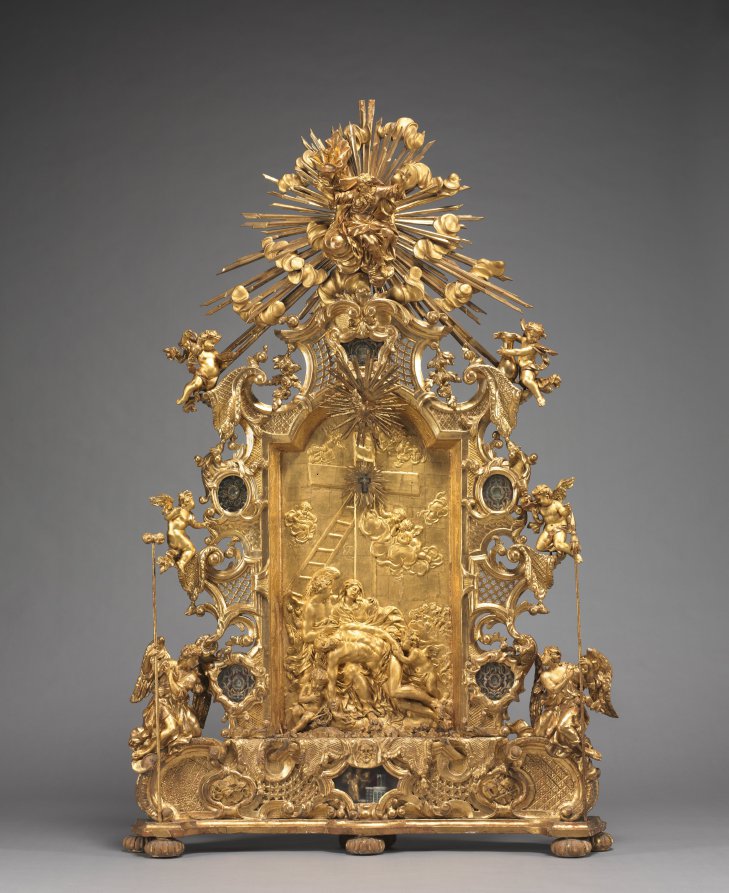
Götz covers every surface in gold leaf, giving each part of the object equal importance, rather than simply framing a central picture. In this distinctively Central European approach, figural narrative is subordinate to the overall ensemble.

SERENDIPITYA little unexpected
FamiliarWeird

The museum identifies this sculpture as gilded wood, with relics in niches: gilded wood, mother-of-pearl, ebony, red silk, gold wire, seed pearls, rock crystal, pen and ink on pape and credits Joseph Matthias Götz (German, 1696–1760).

The museum's collection notes: Götz covers every surface in gold leaf, giving each part of the object equal importance, rather than simply framing a central picture. In this distinctively Central European approach, figural narrative is subordinate to the overall ensemble. Götz designed this object to rest on top of an altar, probably in front of a larger painted or sculpted decorative scheme. The work contains relics seen through the small windows on the perimeter. These small remains of holy figures demonstrate the persistence of a medieval Catholic tradition well into the 1700s.

The Cleveland Museum of ArtAltarpiece with Relics

Original explanation based on the sources above. Images carry their own reuse terms.