A CLOSER LOOK
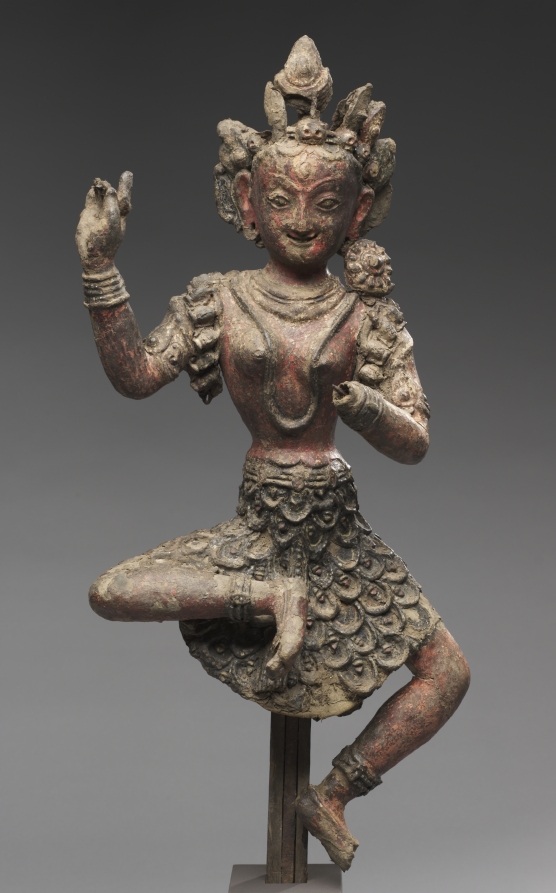
The museum identifies this sculpture as unbaked clay and pigment.
The museum's collection notes: This powerful red goddess dances vigorously and raises one hand that would have held a flaying knife, while the other once held a skull cup. Her bone skirt and garland of freshly severed heads complement the skulls that adorn her crown. Her eyes bulge, her brow furrows, and she bares her teeth. These attributes communicate her power to assist her followers in overcoming passions, ignorance, and fear. This is one of the earliest surviving images made of unbaked clay, using an iron armature and rope strings to support the ornament.