YOUR NEXT DISCOVERY/ArtifactsFollow your curiosity
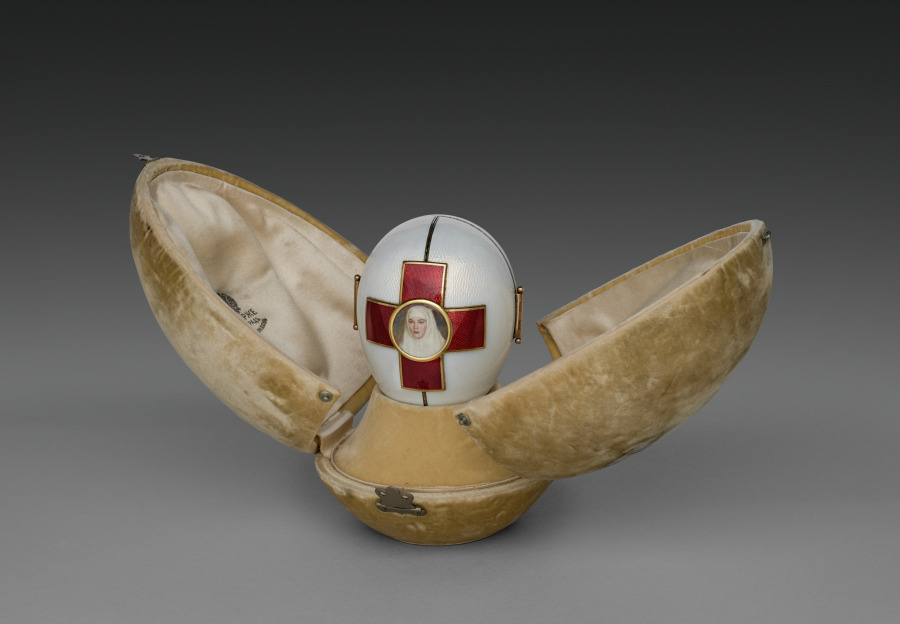
Imperial Red Cross Easter Egg, from The Cleveland Museum of Art
The Cleveland Museum of Art · Open Access · Reuse terms

Russia, St. Petersburg / 1915

Imperial Red Cross Easter Egg

Imperial Red Cross Easter Egg

The Cleveland Museum of Art catalogs Imperial Red Cross Easter Egg as miscellaneous (Russia, St. Petersburg · 1915).

This egg was confiscated by the Bolsheviks during the Russian Revolution and sold by the government of Josef Stalin in the 1930s to raise money for the Soviet treasury.

SERENDIPITYA little unexpected
FamiliarWeird

The museum identifies this miscellaneous as gold, silver gilt, enamel, glass, ivory and credits Peter Carl Fabergé (Russian, 1846–1920).

The museum's collection notes: The House of Fabergé made two imperial Easter eggs in 1915 that honored the contributions of Tsarina Alexandra and her two eldest daughters, Olga and Tatiana, to the war effort as Red Cross Sisters of Mercy. Compared to other Fabergé eggs elaborately ornamented with jewels, the eggs reflected the mood of austerity in Russia during World War I. This version becomes an icon when opened, revealing miniatures of the patron saints of the tsarina’s daughters. After the Russian Revolution, this relic of the Tsarist past was sold by the Soviet government to raise needed cash for the treasury.

The Cleveland Museum of ArtImperial Red Cross Easter Egg

Original explanation based on the sources above. Images carry their own reuse terms.