A CLOSER LOOK
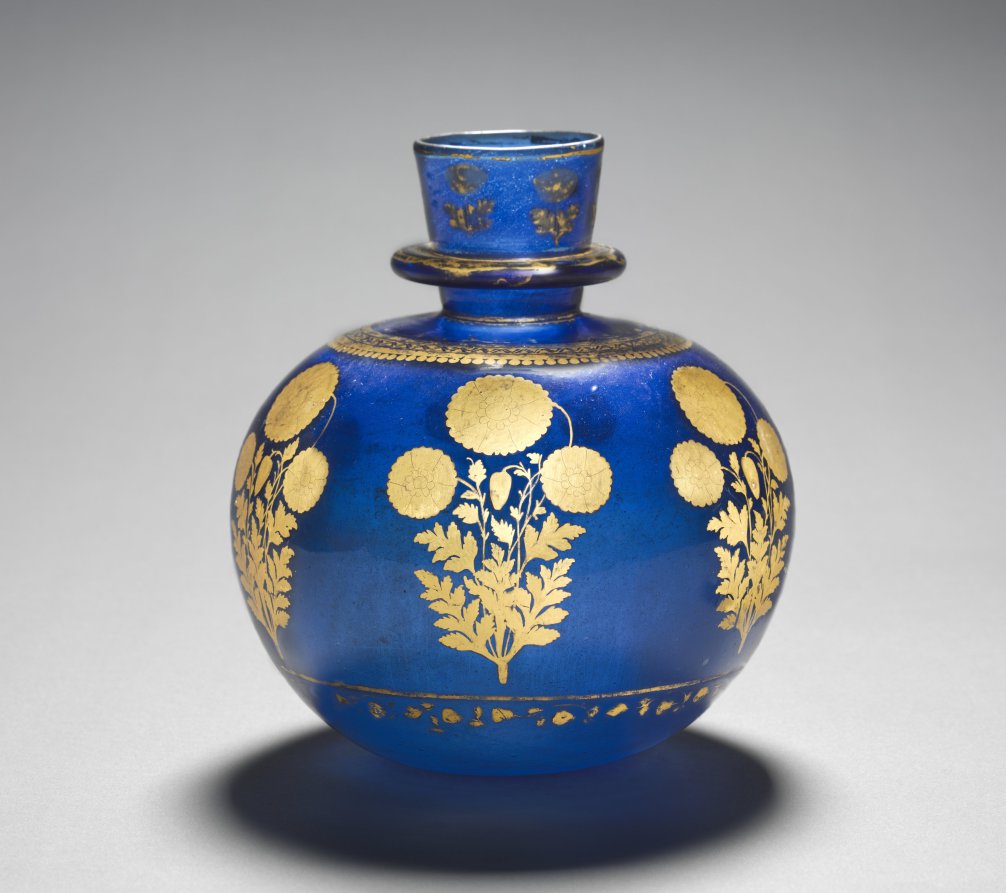
The museum identifies this glass as gold on blue glass.
The museum's collection notes: Smoking tobacco was introduced to the Mughal court from Iran in the very early 1600s and soon became popular. This base formed part of a hookah, or water pipe, which consisted of a base that held water—sometimes perfumed with herbs or fresh fruit—a detachable bowl to hold tobacco, and a long tube. Early hookahs used existing vessels for bases, including coconut shells. By the late 1600s or early 1700s, richly decorated pieces like this were produced. The striking gold poppies on a cobalt blue background might indicate that opium was used in the hookah.