A CLOSER LOOK
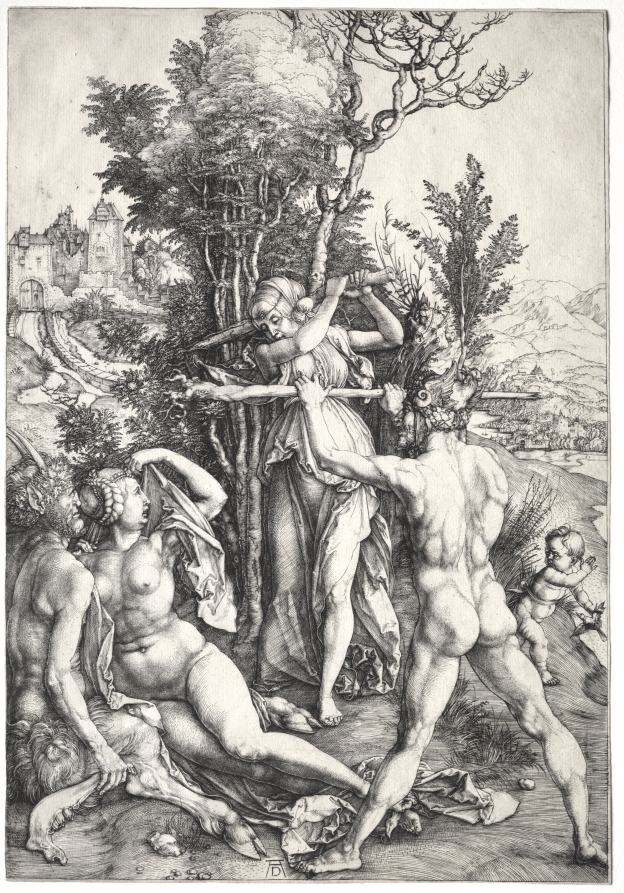
The museum identifies this print as engraving and credits Albrecht Dürer (German, 1471–1528).
The museum's collection notes: Albrecht Dürer traveled from Nuremberg, his hometown, to Italy in 1494–95. Evidence suggests that he stopped in Mantua to meet painter Andrea Mantegna, then about 64 years old. The nature of their exchange—if it occurred—is unknown, yet each artist’s engravings profoundly influenced the other. Mantegna’s work introduced Dürer to complex mythological subjects and stories featuring the nude body; Dürer later incorporated one of Mantegna’s nymphs from the print Battle of the Sea Gods into his print Hercules at the Crossroad , shown here.