YOUR NEXT DISCOVERY/ArtifactsFollow your curiosity
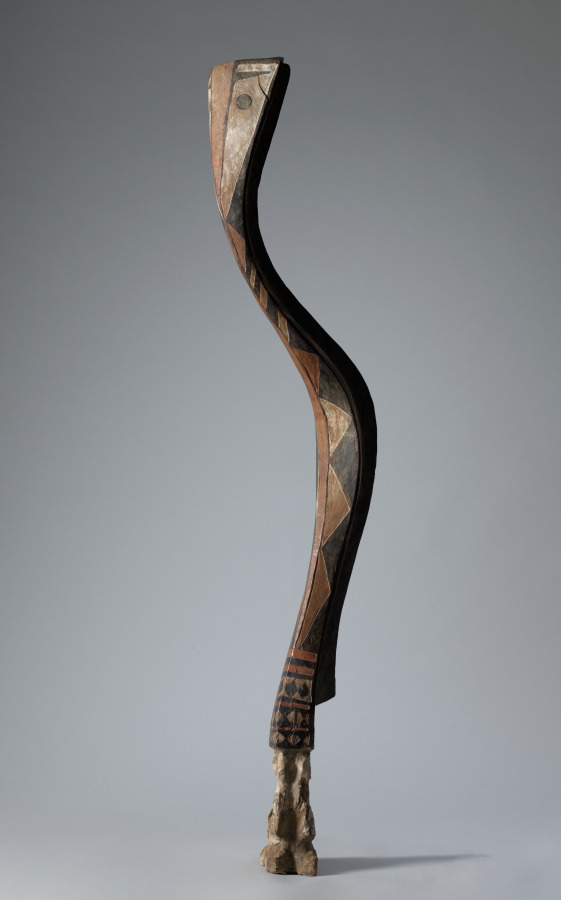
Serpent Headdress, from The Cleveland Museum of Art
The Cleveland Museum of Art · Open Access · Reuse terms

Africa, West Africa, Guinea, possibly Baga-style maker / late 1800s–early 1900s

Serpent Headdress

Serpent Headdress

The Cleveland Museum of Art catalogs Serpent Headdress as mask (Africa, West Africa, Guinea, possibly Baga-style maker · late 1800s–early 1900s).

In the context of boys' initiations, the serpent headdress was sometimes identified as the rainbow, which the Baga and their neighbors associate with beginnings and endings, life and death, and the continuation of lineages.

SERENDIPITYA little unexpected
FamiliarWeird

The museum identifies this mask as Wood (Nauclea pobeguinii) and paint.

The museum's collection notes: Nearly five feet tall, this serpent headdress towered above crowds when danced. Its two faces seemed to look in all directions. Secured by a conical framework of palm branches on a costumed man’s head, it appeared at key points in initiation rites for both boys and girls. This multi-colored snake may be the serpent-spirit Ninkinanka. It can be likened to the rainbow, whose changing colors evoke how boys transform into men during initiation. A staged circa 1954 photograph depicts the serpent headdress now at the CMA. Serpent masquerades stopped in the mid-1950s when most Nalu and Baga people converted to Islam.

The Cleveland Museum of ArtSerpent Headdress

Original explanation based on the sources above. Images carry their own reuse terms.