A CLOSER LOOK
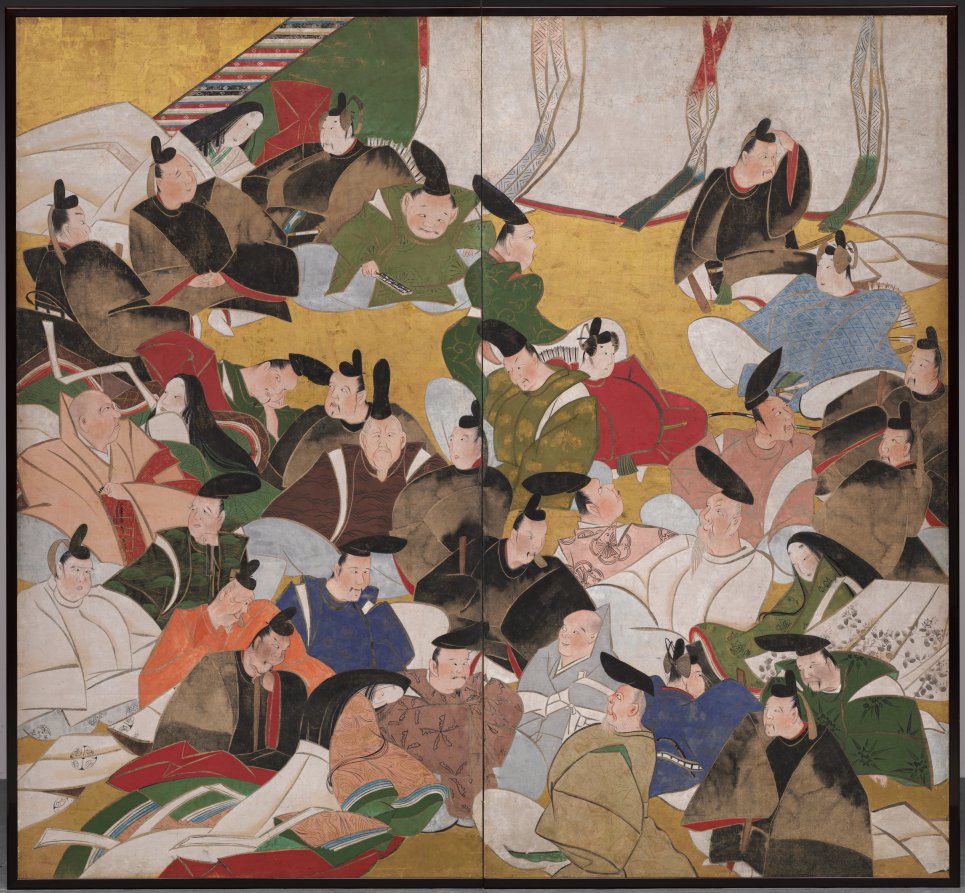
The museum identifies this painting as two-fold screen; ink, color, and gold on paper and credits Tatebayashi Kagei (Japanese, active mid-1700s).
The museum's collection notes: Fujiwara no Kintō (996–1075), a Japanese courtier, scholar, and poet, compiled select examples by the most celebrated composers of 31-syllable poems ( waka ) from the 600s to the 1000s. Painters soon made these “thirty-six poetic immortals” a favorite subject, traditionally presenting the poets in sequential, idealized portraits paired with their poems. In this interpretation, a chronologically impossible gathering of these great talents is in progress. The screen’s composition follows one devised by design virtuoso Ogata Kōrin (1658–1716).