YOUR NEXT DISCOVERY/ArtifactsFollow your curiosity
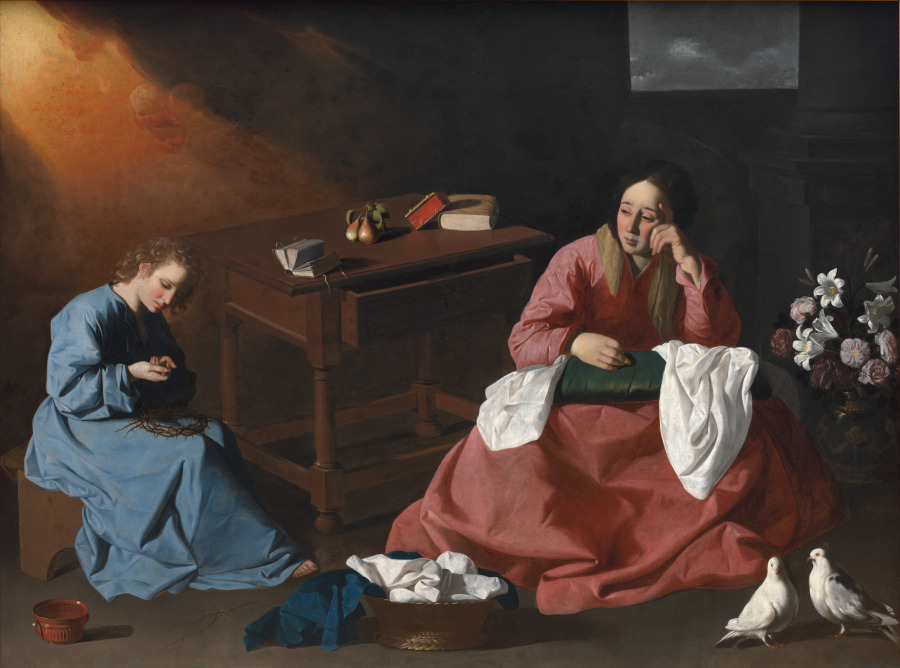
Christ and the Virgin in the House at Nazareth, from The Cleveland Museum of Art
The Cleveland Museum of Art · Open Access · Reuse terms

Spain / c. 1640

Christ and the Virgin in the House at Nazareth

Christ and the Virgin in the House at Nazareth

The Cleveland Museum of Art catalogs Christ and the Virgin in the House at Nazareth as painting (Spain · c. 1640).

Zurbarán, also a still-life painter, tilts the tabletop to emphasize the symbolic books and fruit.

SERENDIPITYA little unexpected
FamiliarWeird

The museum identifies this painting as oil on canvas and credits Francisco de Zurbarán (Spanish, 1598–1664).

The museum's collection notes: Stories of Christ’s childhood and adolescence became increasingly popular during the Counter-Reformation because they were easily understood by a broad public. Rather than taking a story from the Bible, Zurbarán appears to have invented this subject, in which Jesus pricks himself on a crown of thorns he is weaving, foretelling his later torment at the Crucifixion. Despite the grand scale and monumental figures, the work has remarkable intimacy and quietness, emphasizing such details as the Virgin’s tears.

The Cleveland Museum of ArtChrist and the Virgin in the House at Nazareth

Original explanation based on the sources above. Images carry their own reuse terms.