A CLOSER LOOK
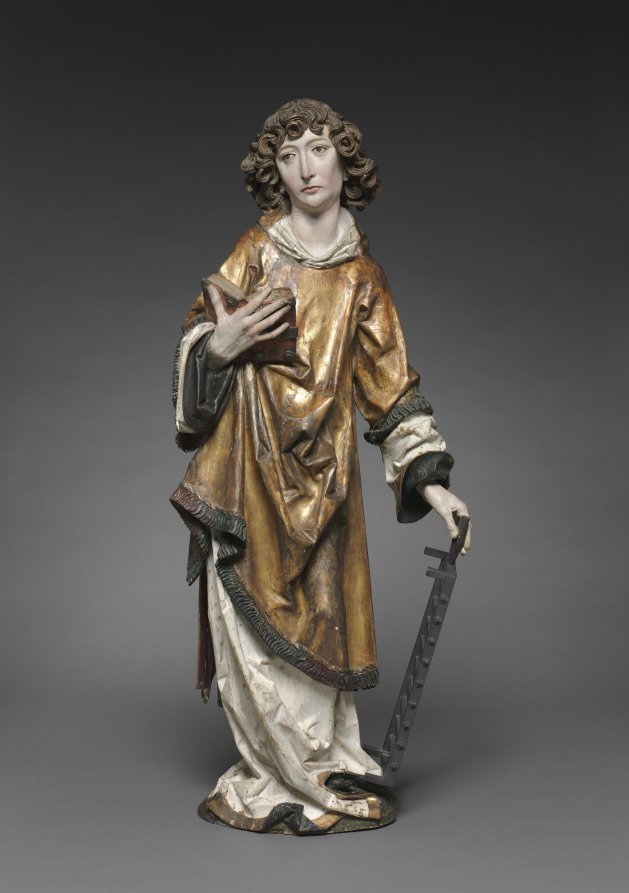
The museum identifies this sculpture as lindenwood with polychromy and gilding and credits Tilman Riemenschneider (German, active Würzburg, c. 1460–1531).
The museum's collection notes: This sculpture, along with that of Saint Stephen (1959.43), and two female saints preserved in Frankfurt (Historisches Museum), are believed to be the remaining fragments of a large altarpiece carved by Riemenschneider for the Dominican convent in Rothenburg in Franconia (demolished in 1813). Saints Stephen and Lawrence both wear the dalmatic to indicate their status as deacons in the early church. Each holds a symbol of his martyrdom; here, Saint Lawrence holds a grill to indicate his death by burning. Late Gothic Style Art in Germany through the early 1500s remained firmly anchored in the late Gothic style with its associated interests in r