A CLOSER LOOK
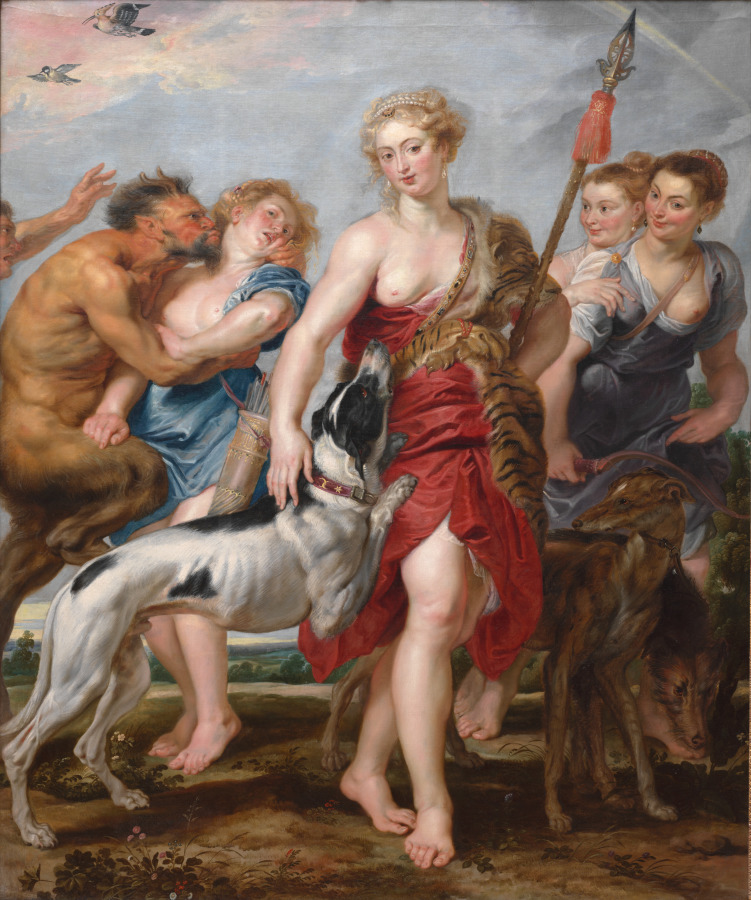
The museum identifies this painting as oil on canvas and credits Peter Paul Rubens (Flemish, 1577–1640).
The museum's collection notes: Diana, the Roman goddess of the hunt, wears a crescent on her forehead, also identifying her as the moon goddess. Diana lived apart from men, accompanied by a group of nymphs; she often represented unattainable beauty or chastity. With a nymph at left fending off a lustful satyr, Rubens refers to a struggle between vice and virtue, combining a sensual display of female bodies with a moral undertone. To bring the viewer more fully into the narrative, Rubens pulls the full-bodied figures to the front of the picture plane, and Diana steps forward, activating the space between viewer and subject. The nymph at the right has the features of Isabell