YOUR NEXT DISCOVERY/ArtifactsFollow your curiosity
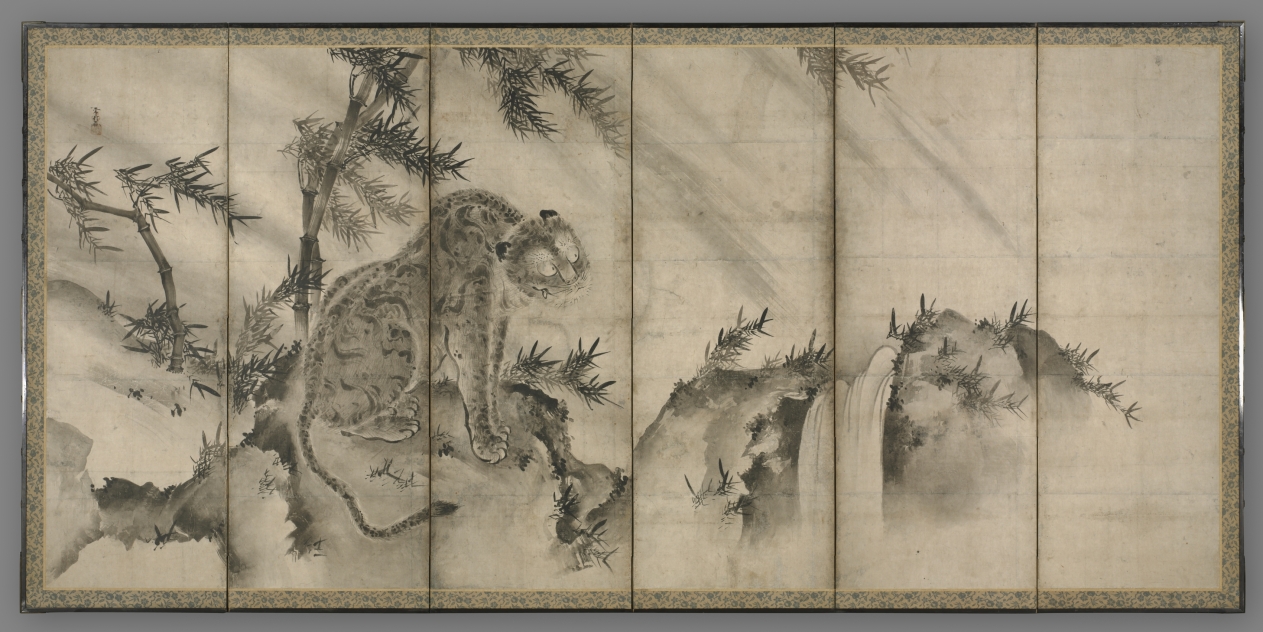
Dragon and Tiger, from The Cleveland Museum of Art
The Cleveland Museum of Art · Open Access · Reuse terms

Japan, Muromachi period (1392–1573) to Momoyama period (1573–1615) / c. 1546–56

Dragon and Tiger

Dragon and Tiger

The Cleveland Museum of Art catalogs Dragon and Tiger as painting (Japan, Muromachi period (1392–1573) to Momoyama period (1573–1615) · c. 1546–56).

Although the theme of this painting derives from Chinese philosophy and pictorial culture, Sesson's tiger is likely modeled after Korean prototypes of the Joseon period circulating in Japan.

SERENDIPITYA little unexpected
FamiliarWeird

The museum identifies this painting as One of a pair of six-panel folding screens; ink on paper and credits Sesson Shūkei (Japanese, c. 1492–c. 1577).

The museum's collection notes: In Chinese cosmology, the tiger's roar is said to produce wind. In Chinese paintings, the tiger is often shown with a dragon, who creates rain clouds. Together, they represent the balancing forces of the universe. Chinese presentations of the theme, often in hanging scroll format, provided the basic composition for the pair of screens to which this one belongs.

The Cleveland Museum of ArtDragon and Tiger

Original explanation based on the sources above. Images carry their own reuse terms.