YOUR NEXT DISCOVERY/ArtifactsFollow your curiosity
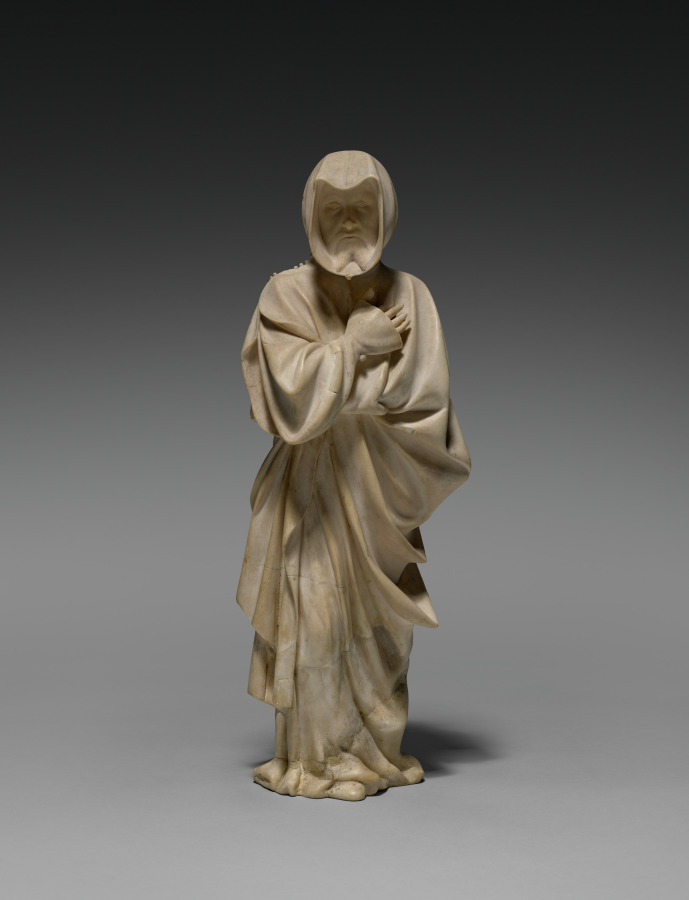
Mourner from the Tomb of Philip the Bold, Duke of Burgundy (1364–1404), from The Cleveland Museum of Art
The Cleveland Museum of Art · Open Access · Reuse terms

Netherlands, active Dijon, 15th century / 1404–10

Mourner from the Tomb of Philip the Bold, Duke of Burgundy (1364–1404)

Mourner from the Tomb of Philip the Bold, Duke of Burgundy (1364–1404)

The Cleveland Museum of Art catalogs Mourner from the Tomb of Philip the Bold, Duke of Burgundy (1364–1404) as sculpture (Netherlands, active Dijon, 15th century · 1404–10).

A plaster cast of this mourner decorates the empty niche in the Tomb of Philip the Bold in Dijon, France.

SERENDIPITYA little unexpected
FamiliarWeird

The museum identifies this sculpture as vizille alabaster and credits Claus de Werve (Netherlandish, 1380–1439).

The museum's collection notes: This figure comes from the tomb of Duke Philip the Bold from the church of Champmol near Dijon (Burgundy, France). Philip, who founded the monastery and designated it as his burial place, hired the best artists, many of whom came from the Netherlands. While the commission was given in 1381, the work was not completed until 1410, six years after the duke’s death. This mourner is unusual for the time because it is not carved as a static low relief on the pedestal of the tomb but interacts with the viewers and their fellow procession members. The lifelike quality of the figure is due in large part to the alabaster. Its softness allowed artists t

The Cleveland Museum of ArtMourner from the Tomb of Philip the Bold, Duke of Burgundy (1364–1404)

Original explanation based on the sources above. Images carry their own reuse terms.