YOUR NEXT DISCOVERY/ArtifactsFollow your curiosity
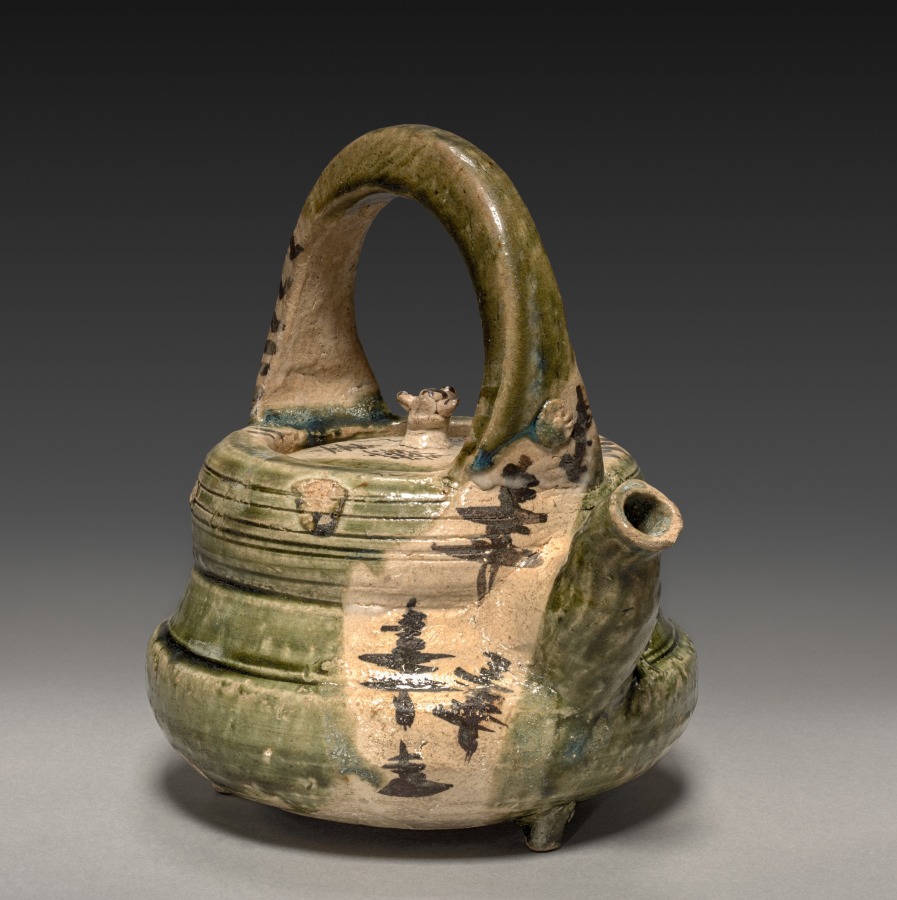
Ewer (Suichū), from The Cleveland Museum of Art
The Cleveland Museum of Art · Open Access · Reuse terms

Japan, Momoyama period (1573–1615) / early 1600s

Ewer (Suichū)

Ewer (Suichū)

The Cleveland Museum of Art catalogs Ewer (Suichū) as ceramic (Japan, Momoyama period (1573–1615) · early 1600s).

Oribe wares are named for the tea master Furuta Oribe, who initiated the flamboyant designs that characterize them.

SERENDIPITYA little unexpected
FamiliarWeird

The museum identifies this ceramic as Glazed stoneware with iron oxide underglaze slip (Mino ware, Oribe type).

The museum's collection notes: This ewer was made to replenish the jar that holds water for rinsing teabowls and filling the iron kettle at tea gatherings. Highly abstracted pine trees, cascading ivy, stripes, and grids make up the designs in underglaze iron oxide, while the overall surface alternates between a transparent glaze and a green glaze characteristic of some Oribe tea wares.

The Cleveland Museum of ArtEwer (Suichū)

Original explanation based on the sources above. Images carry their own reuse terms.