A CLOSER LOOK
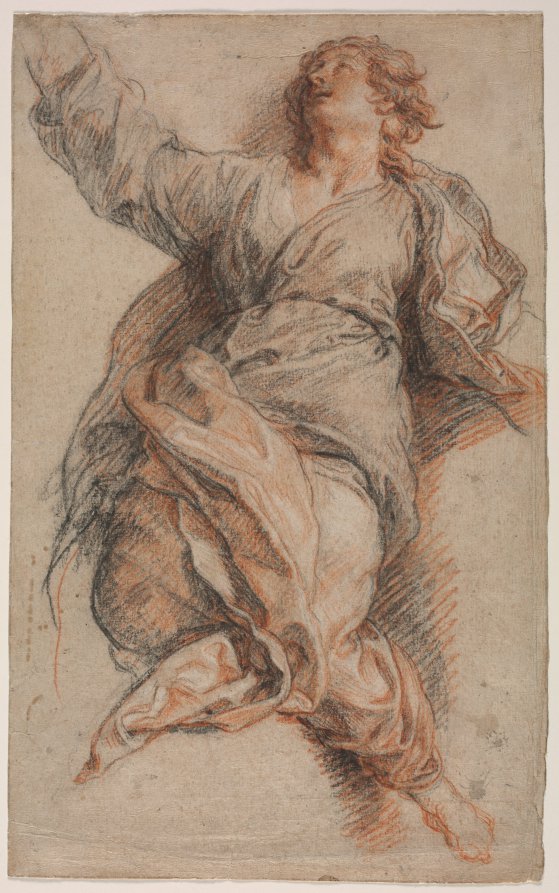
The museum identifies this drawing as black, red, and white chalk and credits Charles de La Fosse (French, 1636–1716).
The museum's collection notes: This drawing is a study for a fresco in the Parisian church of Les Invalides. The structure's four pendentives are each decorated with images of the Four Evangelists, and the Cleveland sheet relates to the design for St. John. La Fosse developed his ideas in numerous preparatory studies before beginning the final painting. He portrayed the religious figures with power and exuberance, imbuing his decorative scheme with unprecedented vigor. Drawings by La Fosse are difficult to find in the United States, and this sheet is an exceptional example of the artist's trois crayons (three-chalk) technique of using black, red, and white chalk together.