YOUR NEXT DISCOVERY/ArtifactsFollow your curiosity
Crucifixion with the Two Thieves, from The Cleveland Museum of Art
The Cleveland Museum of Art · Open Access · Reuse terms

Italy, Piedmont / 1450–1500

Crucifixion with the Two Thieves

Crucifixion with the Two Thieves

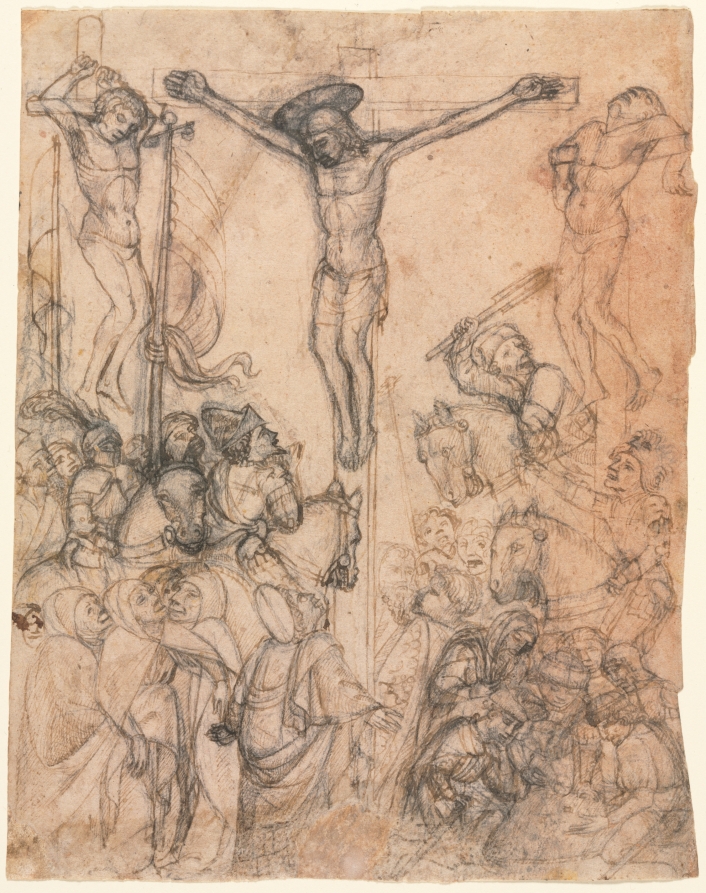
The Cleveland Museum of Art catalogs Crucifixion with the Two Thieves as drawing (Italy, Piedmont · 1450–1500).

In the left foreground Christ's grieving mother, Mary, is supported by two other women: Mary Magdalene and Mary of Clopas. This common grouping is often called the Three Marys.

SERENDIPITYA little unexpected
FamiliarWeird

The museum identifies this drawing as pen and brown ink and black chalk.

The museum's collection notes: To make this drawing—which could be a ricordi (a visual record of a painting)—the artist first sketched part of the composition with charcoal before completing it with pen and ink. Charcoal was not regularly used as a drawing medium until the second half of the 1400s. Even then, it was usually a secondary medium, as seen here, meant to sketch or outline figures to be completed in other media. Charcoal and black chalk became more popular with later generations of artists, including Michelangelo, who found the supple qualities of the media ideal for rendering the human figure.

The Cleveland Museum of ArtCrucifixion with the Two Thieves

Original explanation based on the sources above. Images carry their own reuse terms.