YOUR NEXT DISCOVERY/ArtifactsFollow your curiosity
The White Path Between Two Rivers, from The Cleveland Museum of Art
The Cleveland Museum of Art · Open Access · Reuse terms

Japan, Kamakura period (1185–1333) / 1200s

The White Path Between Two Rivers

The White Path Between Two Rivers

The Cleveland Museum of Art catalogs The White Path Between Two Rivers as painting (Japan, Kamakura period (1185–1333) · 1200s).

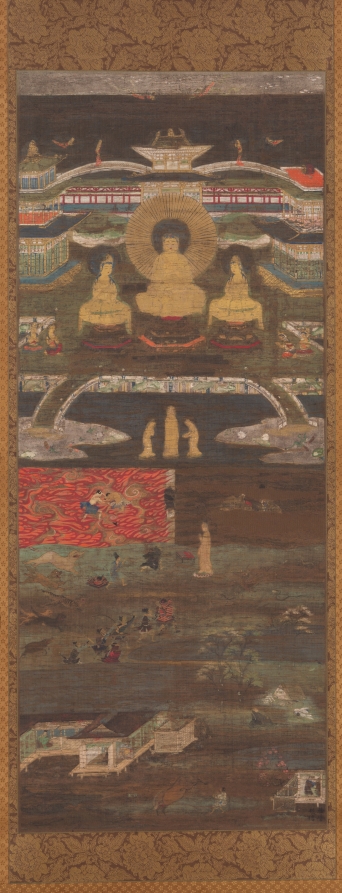
The Six Realms of Transmigration are the: heavenly realm, hells, human realm, animal realm, realm of hungry ghosts, and realm of fierce beings.

SERENDIPITYA little unexpected
FamiliarWeird

The museum identifies this painting as hanging scroll; ink, color, gold, silver, and cut gold on silk.

The museum's collection notes: This painting is a visual presentation of a teaching ascribed to the Chinese Buddhist monk Shandao (善導) (613–681). It describes a challenging journey to the land of the Buddha Amida along a narrow path between a river of fire and a river of water. The story is about escaping the six paths of reincarnation—the heavens and hells, as well as the realms of humans, animals, hungry ghosts, and fierce beings. The Buddha Amida appears at the top in his Pure Land, or Western Paradise.

The Cleveland Museum of ArtThe White Path Between Two Rivers

Original explanation based on the sources above. Images carry their own reuse terms.