YOUR NEXT DISCOVERY/ArtifactsFollow your curiosity
Boy with Anchor, from The Cleveland Museum of Art
The Cleveland Museum of Art · Open Access · Reuse terms

America / 1873

Boy with Anchor

Boy with Anchor

The Cleveland Museum of Art catalogs Boy with Anchor as drawing (America · 1873).

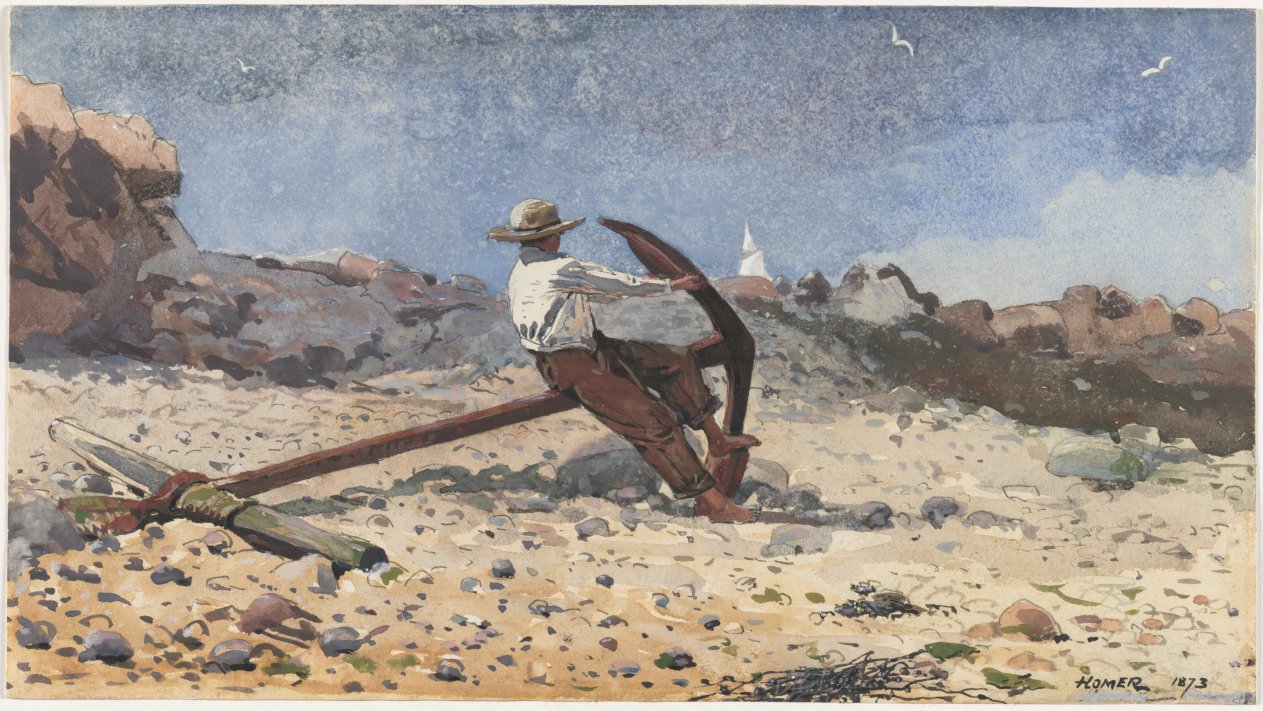
The mottled texture of the sky is an example of Homer’s blotting technique—a subtractive process in which he applied a wash of water, sprinkled some breadcrumbs, and then gently rubbed the paper with his fingers in order to absorb the extra color, leaving behind a granulated texture.

SERENDIPITYA little unexpected
FamiliarWeird

The museum identifies this drawing as Watercolor and graphite on paper and credits Winslow Homer (American, 1836–1910).

The museum's collection notes: In this work from a series of watercolors produced in Gloucester, MA, in the summer of 1873 Winslow Homer evokes the fraught nature of the local fishing industry by focusing not on the perilous work of adults, but rather the children they leave behind. In Boy with Anchor , the massive anchor pointing toward the sea foreshadows the weight of the boy’s maritime destiny. The work is an early example of Homer's talent for evoking atmospheric effects and his interest in technical variety. Presumably working outdoors, Homer layered fluent washes of blue, gray, and brown transparent watercolor over his graphite underdrawing to flesh out the beach an

The Cleveland Museum of ArtBoy with Anchor

Original explanation based on the sources above. Images carry their own reuse terms.