A CLOSER LOOK
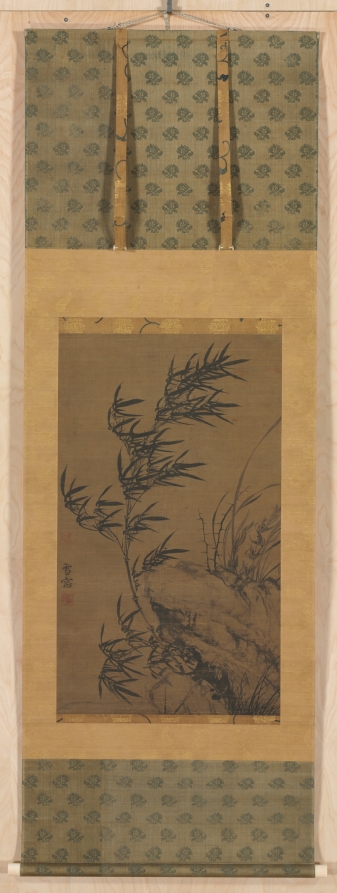
The museum identifies this painting as Hanging scroll; ink on silk and credits Puming (Xuechuang) (Chinese, active before 1274–after 1329).
The museum's collection notes: Bamboo is an evergreen plant that does not break under the weight of snow or the force of the wind, and thus became a favorite motif in literati painting and Chan Buddhism as a metaphor for the virtue of not yielding to worldly temptations. Xuechuang, also known as monk Puming, was a native of Songjiang, near Shanghai, who spent his life as a monk in Suzhou. In 1338, he presided over Yunyan temple on Tiger Hill. Here, he masterfully depicts a bamboo gently bent in a subtle breeze. Puming’s paintings were revered in Japan and Korea.