YOUR NEXT DISCOVERY/ArtifactsFollow your curiosity
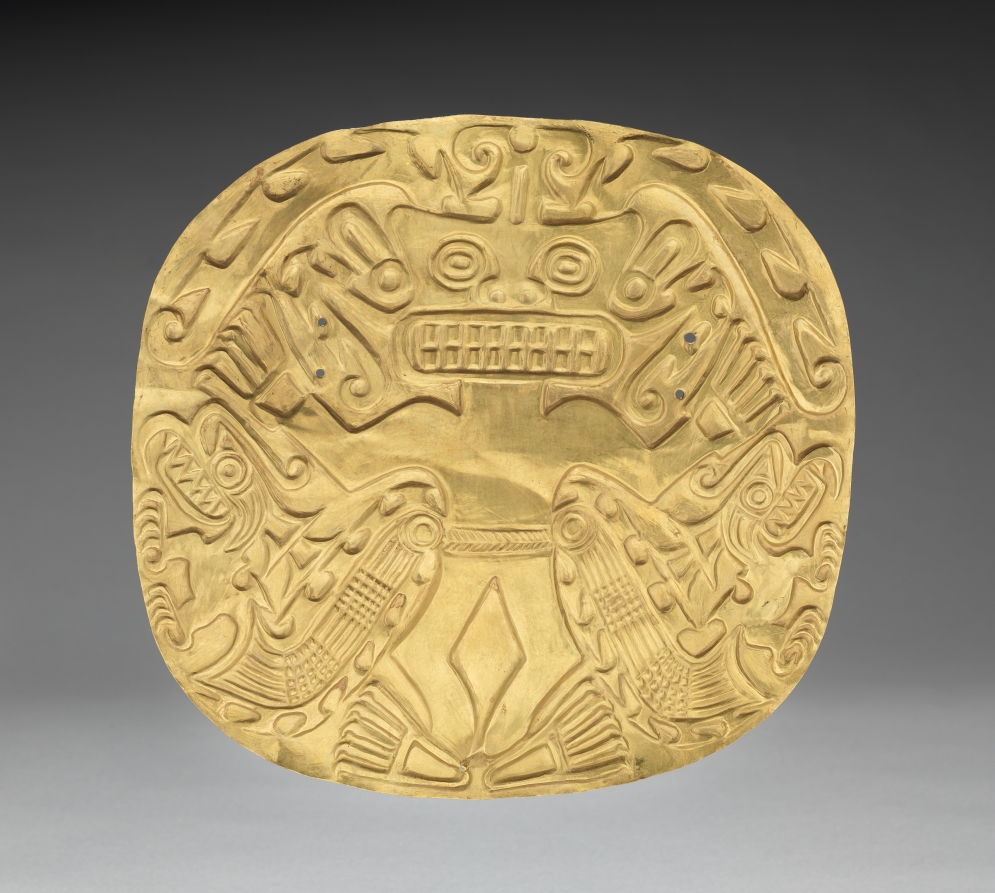
Pectoral (Chest Plaque), from The Cleveland Museum of Art
The Cleveland Museum of Art · Open Access · Reuse terms

Intermediate Region, Panama, Conte style, 5th-10th Century / 400–900

Pectoral (Chest Plaque)

Pectoral (Chest Plaque)

The Cleveland Museum of Art catalogs Pectoral (Chest Plaque) as metalwork (Intermediate Region, Panama, Conte style, 5th-10th Century · 400–900).

Panning for gold was viewed as a sacred activity among the ancient inhabitants of Costa Rica and Panama.

SERENDIPITYA little unexpected
FamiliarWeird

The museum identifies this metalwork as gold alloy.

The museum's collection notes: Harvard archaeologists excavated this and seven other ornaments from several burials at Sitio Conte, a cemetery famous for its lavish graves of powerful chieftains. The young man buried in Grave 26 was such a chief. His status was stunningly memorialized by 21 human companions and 475 objects, many of them personal ornaments made of gold, including a large chest plaque and a rod-shaped ear ornament. The creature on the chest plaque, found close to the chief’s body, has reptile claws and perhaps the head crest of an iguana. Its meaning is unknown but perhaps, as in later periods, reptilian imagery and the warm gleam of gold linked rulers with

The Cleveland Museum of ArtPectoral (Chest Plaque)

Original explanation based on the sources above. Images carry their own reuse terms.