A CLOSER LOOK
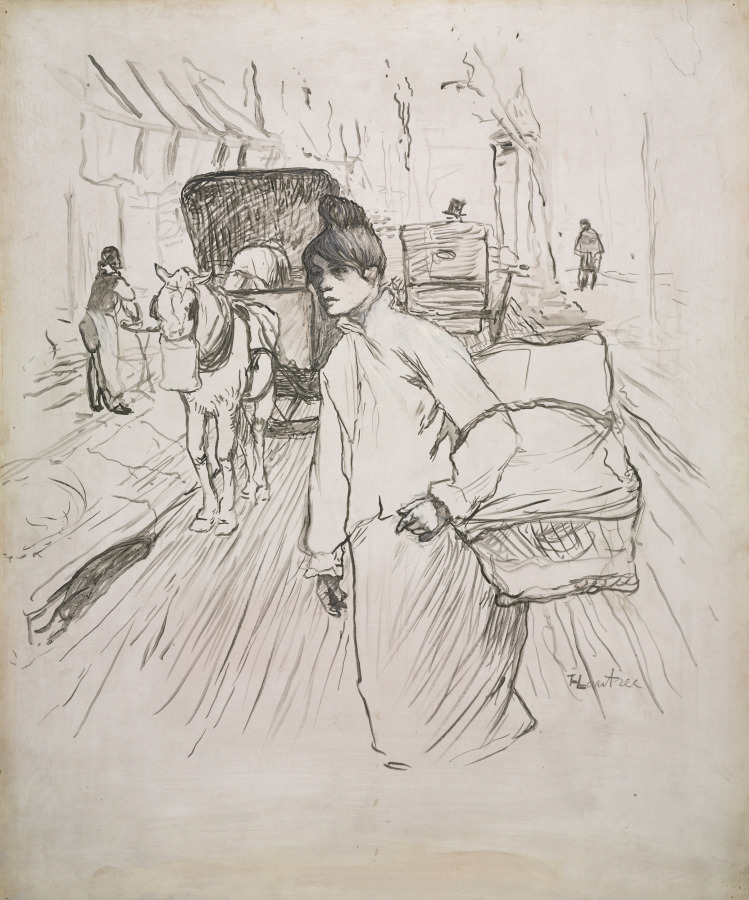
The museum identifies this drawing as black and gray wash with white paint, scratched away in places, on gray cardboard prepared with white ground and credits Henri de Toulouse-Lautrec (French, 1864–1901).
The museum's collection notes: Henri de Toulouse-Lautrec produced this drawing to illustrate an article about Parisian summers. It presents the type of poorly paid worker who remained in the city while others traveled to escape the urban heat. Because the image was to be reproduced in black and white, Toulouse-Lautrec thinned and brushed ink, scraping into it to expose fine white highlights. Like several artworks in Cleveland’s collection, the drawing was formerly owned by Roger Marx, a French collector, curator, and art critic who built perhaps the most substantial holdings of Toulouse-Lautrec’s work around the turn of the century.