YOUR NEXT DISCOVERY/ArtifactsFollow your curiosity
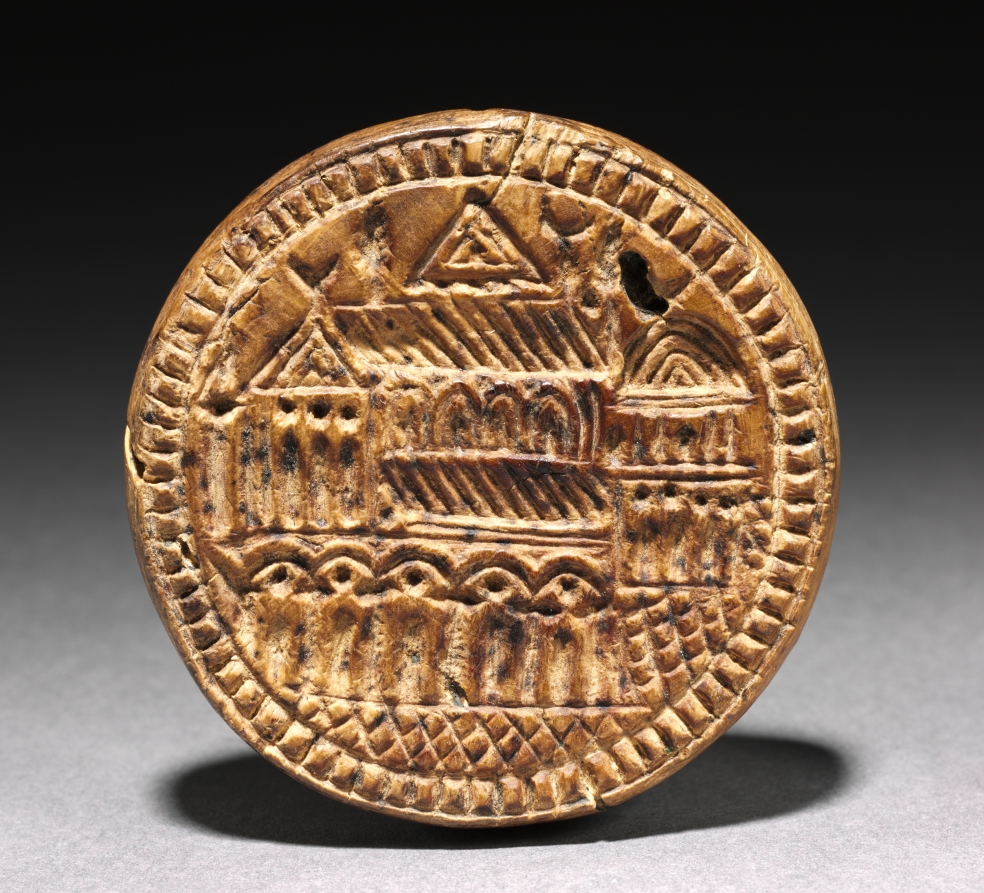
Mold for a Eulogia (Blessing) Bread, from The Cleveland Museum of Art
The Cleveland Museum of Art · Open Access · Reuse terms

Byzantium, Palestine, Byzantine period, 7th-10th century / 600s-900s

Mold for a Eulogia (Blessing) Bread

Mold for a Eulogia (Blessing) Bread

The Cleveland Museum of Art catalogs Mold for a Eulogia (Blessing) Bread as sculpture (Byzantium, Palestine, Byzantine period, 7th-10th century · 600s-900s).

Medieval Christian pilgrims often traveled months or years to religious sites in the Holy Land and returned home with blessed mementos of their journey, such as vials of holy water, relics from saints, and even special loaves of bread. This mold was used to mark bread with an image of the Church of Holy Sepulchre in Jerusalem; the bread was then distributed to pilgrims.

SERENDIPITYA little unexpected
FamiliarWeird

The museum identifies this sculpture as wood.

The museum's collection notes: It was a common early Christian practice to stamp images and inscriptions into loaves of bread using special molds. Representing the Church of the Holy Sepulcher on Mount Golgotha--the hill outside Jerusalem on which Christ was crucified and entombed--this wooden mold was probably used to stamp loaves of bread distributed to pilgrims visiting Jerusalem, in commemoration of their journey.

The Cleveland Museum of ArtMold for a Eulogia (Blessing) Bread

Original explanation based on the sources above. Images carry their own reuse terms.