YOUR NEXT DISCOVERY/ArtifactsFollow your curiosity
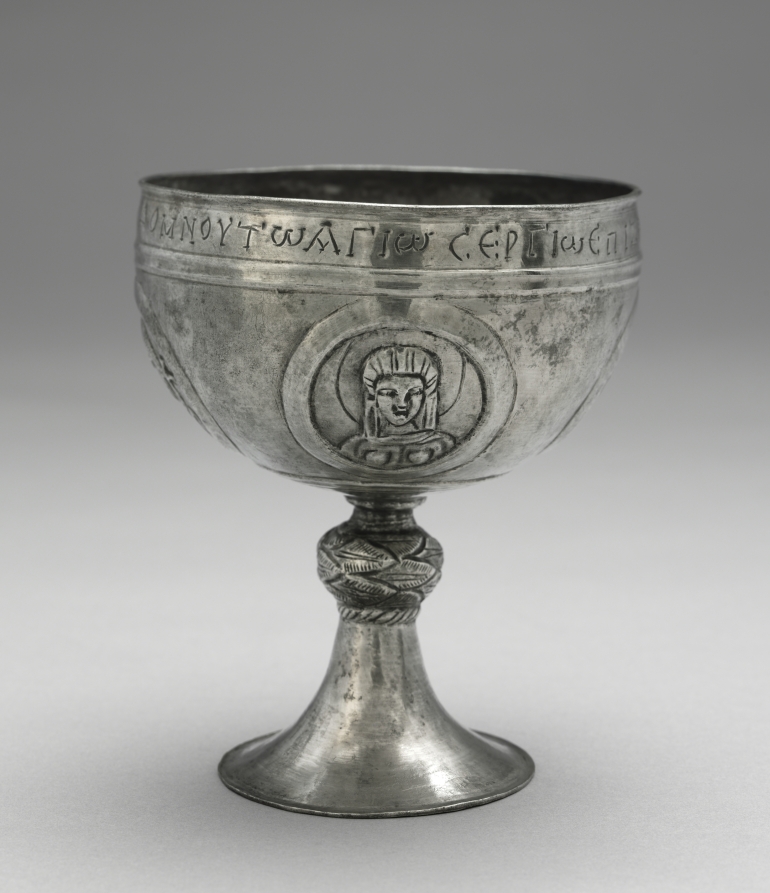
Chalice from the Beth Misona Treasure, from The Cleveland Museum of Art
The Cleveland Museum of Art · Open Access · Reuse terms

early Byzantium, Constantinople or Syria, Byzantine period, 6th-7th Century / c. 500–700

Chalice from the Beth Misona Treasure

Chalice from the Beth Misona Treasure

The Cleveland Museum of Art catalogs Chalice from the Beth Misona Treasure as metalwork (early Byzantium, Constantinople or Syria, Byzantine period, 6th-7th Century · c. 500–700).

These four liturgical silver vessels—a paten and three chalices (1950.378–81)—form what is now called the Beth Misona Treasure, named for the village in northern Syria for which the objects were made. While nothing is known about the exact location and circumstances of the treasure's discovery, the people of the villag

SERENDIPITYA little unexpected
FamiliarWeird

The museum identifies this metalwork as silver.

The museum's collection notes: These four liturgical silver vessels—a paten and three chalices (1950.378–81)—form what is now called the Beth Misona Treasure, named for the village in northern Syria for which the objects were made. While nothing is known about the exact location and circumstances of the treasure's discovery, the people of the village of Beth Misona were, like other Christian communities in Syria and Palestine, probably forced to bury their church silver to hide it from the Persians or Arabs, who conquered their lands in the first half of the 600s. The paten, which held pieces of Eucharistic bread used during Mass, is decorated with an engraved Latin cross

The Cleveland Museum of ArtChalice from the Beth Misona Treasure

Original explanation based on the sources above. Images carry their own reuse terms.