A CLOSER LOOK
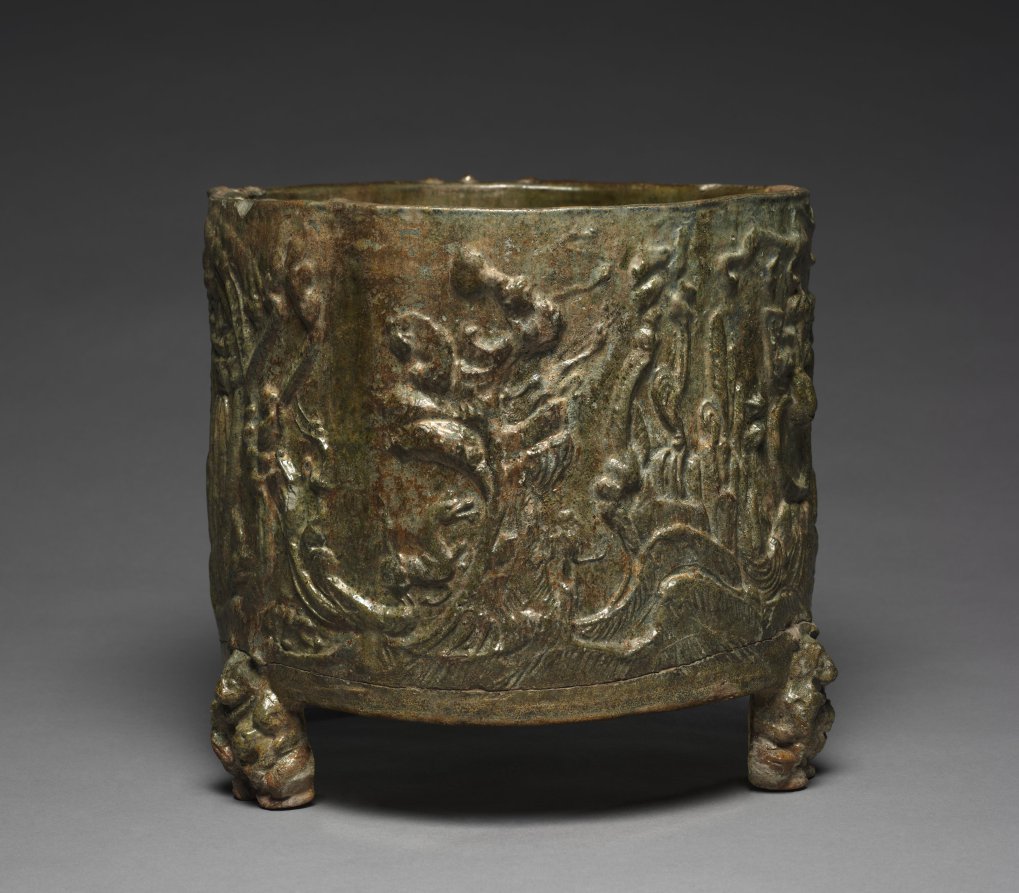
The museum identifies this ceramic as lead glazed earthenware with molded relief.
The museum's collection notes: Vessels like this often are call "hill jars" since many survive with conical covers shaped in rising peaks. "Squatting bear" feet and false animal-mask ring handles are common to the group. This cylinder has been molded in two relief bands depicting hills and three populated with a medley of real and imaginary creatures. Wispy human-like figures are associated with a popular cult of Taoism prevalent in China during the Han Dynasty. The scene may represent a paradise of immortality idealized by that cult and appropriate to this vessel's offering as a burial gift. When excavated from Han tombs, similar jars have been found to hold animal bones