South Italy, Campania / 400–200 BCE
Fibula (Pin)
Fibula (Pin)
The Cleveland Museum of Art catalogs Fibula (Pin) as jewelry (South Italy, Campania · 400–200 BCE).
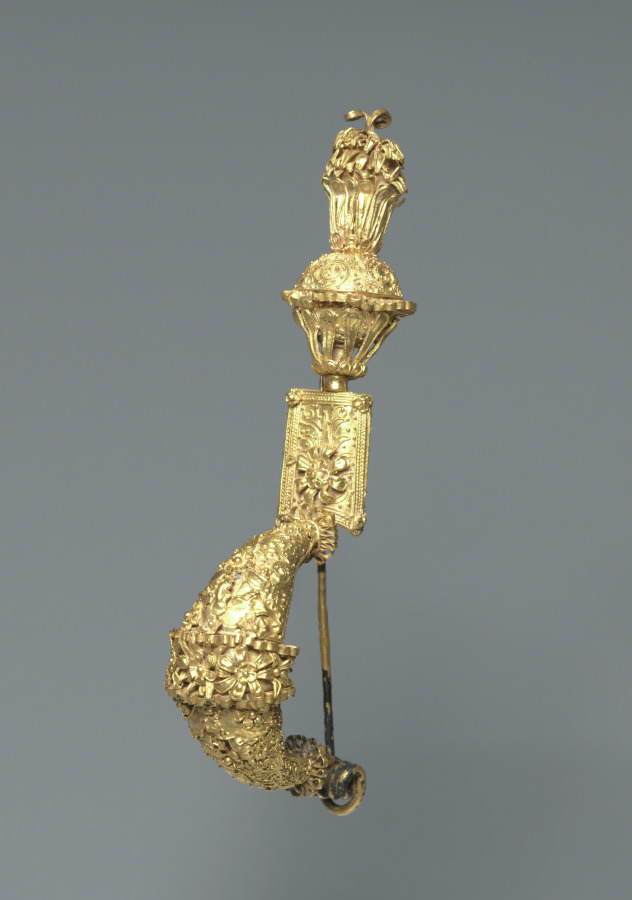
This fibula’s elaborate surface includes soldered gold wire and granulated spheres.

South Italy, Campania / 400–200 BCE
Fibula (Pin)
The Cleveland Museum of Art catalogs Fibula (Pin) as jewelry (South Italy, Campania · 400–200 BCE).
This fibula’s elaborate surface includes soldered gold wire and granulated spheres.
A CLOSER LOOK
The museum identifies this jewelry as gold.
The museum's collection notes: This extravagant fibula, likely used to fasten garments, is decorated with gold rosettes and vines. An enormous leech-shaped bow and pin form the body of the fibula. A band of rosettes adorns the center of the bow. Above the bow, a gold plaque is adorned with an eight-petaled flower and palmette filigree. A gold bead, perhaps representing a pomegranate, tops the plaque. The bead is crowned with oblong petals and sprouting leaves.
FOLLOW THE EVIDENCE
The Cleveland Museum of ArtFibula (Pin)Original explanation based on the sources above. Images carry their own reuse terms.