YOUR NEXT DISCOVERY/ArtifactsFollow your curiosity
Satyress, from The Cleveland Museum of Art
The Cleveland Museum of Art · Open Access · Reuse terms

Italy / c. 1525–28

Satyress

Satyress

The Cleveland Museum of Art catalogs Satyress as sculpture (Italy · c. 1525–28).

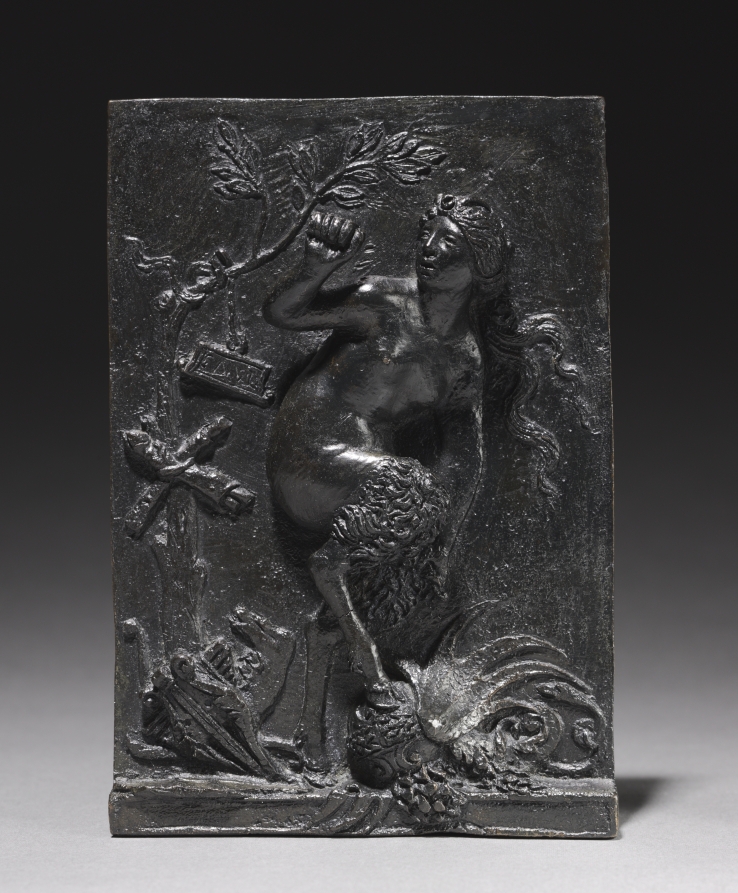
In antiquity, satyrs were lustful woodland deities who delighted in wine and revelry. Renaissance artists adopted them as symbols of vice and carnal love; the female satyr, or satyress, on this bronze plaquette, recently reattributed from Riccio to Mosca, was probably derived from a copper engraving of a Roman sarcopha

SERENDIPITYA little unexpected
FamiliarWeird

The museum identifies this sculpture as bronze and credits Giovanni Maria Mosca (Italian, 1495/99–1574).

The museum's collection notes: In antiquity, satyrs were lustful woodland deities who delighted in wine and revelry. Renaissance artists adopted them as symbols of vice and carnal love; the female satyr, or satyress, on this bronze plaquette, recently reattributed from Riccio to Mosca, was probably derived from a copper engraving of a Roman sarcophagus by Marcantonio Raimondi (c. 1470/82-1527/34). Both the sarcophagus and subsequent engraving depicted a bacchanalia, or scene of orgiastic carousal; the peculiar objects surrounding the satyress have been added by the artist, possibly in an effort to remove the figure from her lewd original composition and give a more refined

The Cleveland Museum of ArtSatyress

Original explanation based on the sources above. Images carry their own reuse terms.