YOUR NEXT DISCOVERY/ArtifactsFollow your curiosity
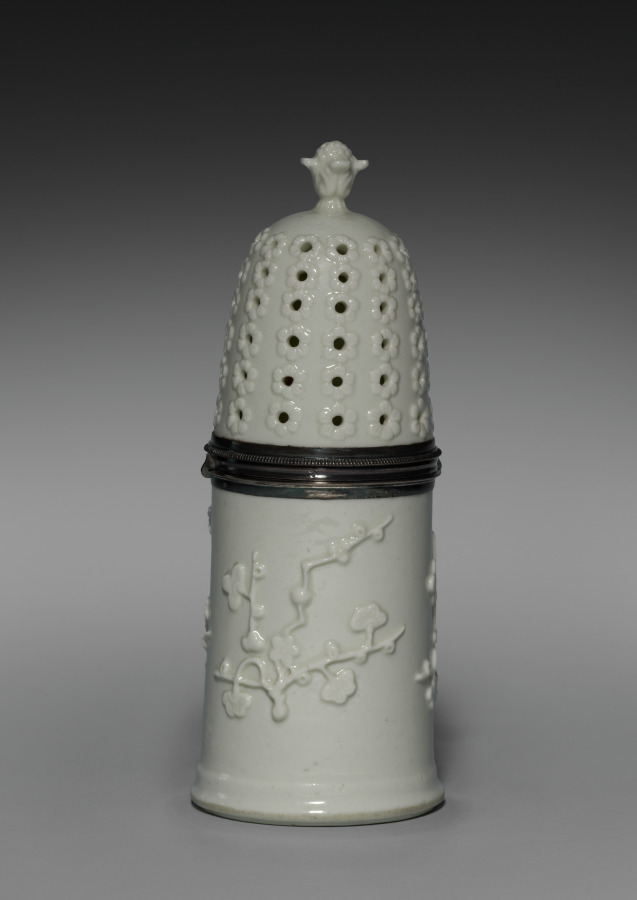
Caster (Saupoudreuse), from The Cleveland Museum of Art
The Cleveland Museum of Art · Open Access · Reuse terms

France, Saint Cloud, 18th century / c. 1732–38

Caster (Saupoudreuse)

Caster (Saupoudreuse)

The Cleveland Museum of Art catalogs Caster (Saupoudreuse) as ceramic (France, Saint Cloud, 18th century · c. 1732–38).

Prunus branches, which refer to flowering trees and shrubs including plums, cherries, peaches, nectarines, apricots, and almonds, were a common motif in Chinese porcelain.

SERENDIPITYA little unexpected
FamiliarWeird

The museum identifies this ceramic as soft-paste porcelain, silver mount and credits Saint Cloud Porcelain Factory (French).

The museum's collection notes: This cylindrical caster with a removable pierced cover may have held sugar. It likely derives its form from silver casters manufactured pre-1700. Its all-white, molded, prunus branch decorations are characteristic of blanc de chine, the term used in France to reference the highly prized porcelain produced in the southeastern Fujian province of Dehua, China, known for its pure color and high degree of translucence.

The Cleveland Museum of ArtCaster (Saupoudreuse)

Original explanation based on the sources above. Images carry their own reuse terms.