YOUR NEXT DISCOVERY/ArtifactsFollow your curiosity
Plaque, from The Cleveland Museum of Art
The Cleveland Museum of Art · Open Access · Reuse terms

Peru, North Coast, Chongoyape(?), Chavín style (900-200 BCE) / c. 500–200 BCE

Plaque

Plaque

The Cleveland Museum of Art catalogs Plaque as metalwork (Peru, North Coast, Chongoyape(?), Chavín style (900-200 BCE) · c. 500–200 BCE).

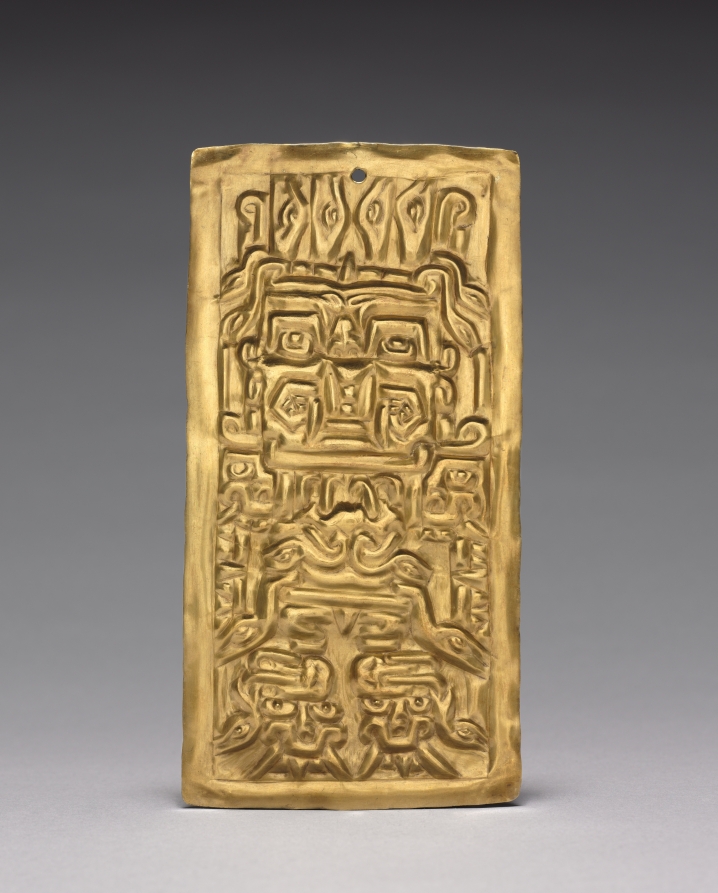
These plaques showing a powerful Chavín deity may come from a group of gold objects found in a lavish tomb in the 1920s. One is shaped as the deity’s fanged head, its fur transformed into sixteen serpents that edge the plaque.

SERENDIPITYA little unexpected
FamiliarWeird

The museum identifies this metalwork as hammered and cut gold.

The museum's collection notes: These plaques showing a powerful Chavín deity may come from a group of gold objects found in a lavish tomb in the 1920s. One is shaped as the deity’s fanged head, its fur transformed into sixteen serpents that edge the plaque. On the other, the deity’s visually elusive body also appears: the clawed hands over the chest may clutch a horizontal staff, an emblem of authority; across the waist is a belt that sprouts serpents; and beneath are the legs and feet, which stand atop fanged masks.

The Cleveland Museum of ArtPlaque

Original explanation based on the sources above. Images carry their own reuse terms.