A CLOSER LOOK
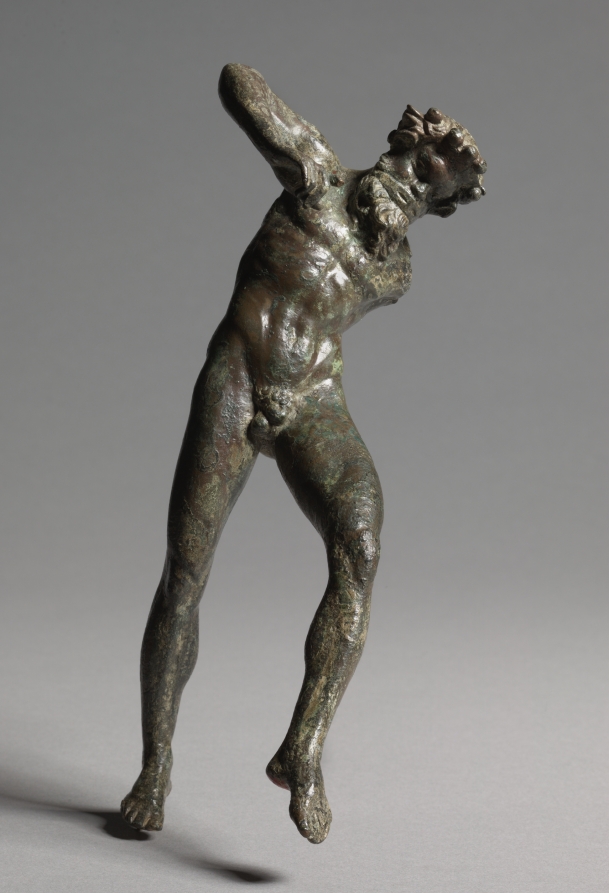
The museum identifies this sculpture as bronze.
The museum's collection notes: With its long limbs and unbalanced pose, this bronze statuette captures a male figure in the middle of a dance. His pointed ears, snub nose, and berry crown mark him as a satyr, a part-man, part-horse follower of Dionysos, the Greek god of wine and revelry. He probably once held auloi (musical pipes), to judge from the placement and shape of his right hand, plus the strap around his mouth; his left arm is now missing. Composed of multiple cast pieces joined together, the dynamic pose of this statuette shows the Hellenistic interest in movement and the body.